Monday, December 18, 2023

Doc Savage #93 - Tunnel Terror

I'm no authority on Doc Savage. I've read a handful of pulp stories featuring the Man of Bronze and his bickering all-star team of supporting characters. I've enjoyed the stories for the most part, but always found the plot-development to build to a disappointing reveal as to who, or what, was creating the hideous, menacing, and all-consuming evil that plagued society for roughly 130-paperback pages. In some books the reveal is senseless, like in Quest of Qui (July 1935) when the mysterious glowing liquid found in the New York harbor is left unanswered. Or, why Vikings appeared ageless in the story. But, with a new mindset and determination, I journeyed into the dark to experience the August 1940 story Tunnel Terror, which was authored by William G. Bogart and reprinted as a Bantam paperback (#93) in February 1979.

Engaging the part of my brain that loves Scooby-Doo and Hardy Boys, I read and enjoyed Tunnel Terror. The book begins with a drifting laborer named Hardrock Hennesey wishing he was in the safety of New York City instead of an undisclosed Western-American mining town. While walking along a rural highway, Hennesey experiences a strange fog that seems to instantly dry out people into a brittle, crispy husk. Someone call Doc Savage!

For sake of time, I'll fast-forward through the complex mini-mystery of how Savage is brought from New York to the mining town. Instead, we get Savage, Renny, Ham, and Monk arriving by plane with their two pointless pets, a pig and a runt-sized ape. Together, they begin interviewing Hennesey and the mining supervisors. The goal is to figure out what the fog is and how it scientifically works. But, the fog can't be duplicated or analyzed until someone can actually find it. The secret is in the mines, specifically an unexplored section that hints at a lost race of giant people that commanded torture and sacrifices. Are the giant people still alive? Are they haunting the mines? Only Savage can find the answer.

Tunnel Terror has a great pace and for the most part is very entertaining. The addition of an engineer's brother, a woman named Chick Lancaster, added a little something extra to the narrative. Her team-up with Savage takes place outside of the mining town and involves an investigation into a missing governor. How his capture ties into the weird fog and dried-up people is the detective journey readers embark on. Overall, nothing to dislike here. Tunnel Terror may be one of my favorites of my small Doc Savage sample size. Recommended.

Buy a copy of this book HERE.

Saturday, December 16, 2023

Moon of Madness, Moon of Fear!

Cleveland, Ohio native George Alec Effinger (1947-2002) won Hugo and Nebula awards for his 1988 novelette Schrodinger’s Kitten. Collectively, the science-fiction author wrote over 25 novels including four novelizations of the Planet of the Apes television series. Effinger contributed stories to magazines like Haunt of Horror and Fantastic. In the 1970s, Effinger authored comic book stories for publishers like DC and Marvel, including titles like Fantastic Four, Journey into Mystery, and Sword of Sorcery. My first experience with the writer is his story "Moon of Madness, Moon of Fear", originally published in the first issue of the short-lived Marvel Comics series Chamber of Chills (1972-1976).

The story begins in the gloomy hills of Bavaria as a young man is seen running from wolves in the forest at night. Effinger warns readers that old-wives’ tales might have a grain of truth. The story then goes back just a few hours and shows four young people preparing for a camping trip into the Bavarian wilderness. They receive a warning from an old woman that the residents live by the moon, including both man and wolf. 

Later that night, by the light of the moon, the four people come to the aid of a man found surrounded by wolves in the forest. They bring him to the light of their fire and the group band together to fend off a pack of snarling wolves that have surrounded them. But, as the first rays of sunlight pierce the sky, the young travelers meet their fate. 

The presentation is the team of Dan Adkins (Eerie, Creepy) and his assistant at the time, P. Craig Russell. This was one of Russell’s first comic jobs, as he would later go on to provide artwork for titles like Robin, Batman, Justice League, and Sandman. The book’s cover was penciled by Gil Kane. 

This was neat story with a unique twist on the werewolf formula. The traditional horror concept of a full moon transforming human to wolf is skillfully used by Effinger. The writing is short and to the point, with a careful emphasis on folklore underlined in a form of truth. An entertaining story plus terrific visuals makes this an easy recommendation for spooky 1970s comic book fans. 

Wednesday, December 13, 2023

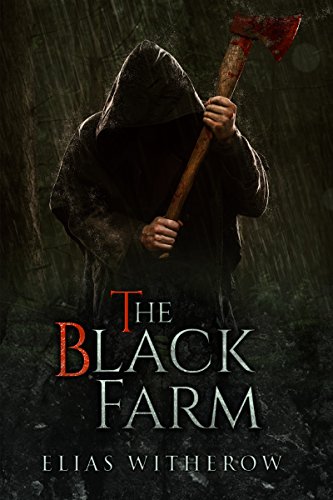
The Black Farm

Contemporary New England author Elias Weatherow started his horror-writing career with online short fiction, and his popularity blossomed as he produced several well-received novels. His masterwork to date is The Black Farm, and I can honestly say that I’ve never read anything quite like it.

Dig the premise:

Nick (our narrator) and Jess are a severely-depressed couple who decide to commit suicide together in one of the grimmest Chapter One openers you’ll ever read. The tragic couple swallows a fistful of pills each and dies in each other’s arms. And then their adventure begins.

Nick awakens, not in heaven or hell, but in a horrific purgatory reserved for suicides. It’s called The Black Farm, and it’s a terrifying place filled with aggressive rotting slugs and a variety of disgusting, murderous creatures. If they kill you, you are simply reincarnated back at The Black Farm to be haunted, hunted and abused for an eternity.

The administrator of The Black Farm is a disgusting, corpulent creature called The Pig. The only way out of The Black Farm is to allow yourself to be eaten by The Pig which allows you to move onto another realm that may be better or worse than the farm. Tough choice.

For his part, Nick chooses to try to survive the horrors of this dark fantasy hellscape in hopes of reuniting with Jess and somehow protecting her in a way that he was unable to on Earth. Over time, the novel adopts the story arc of a men’s-adventure paperback of the 1970s in a dark fantasy setting with Nick on an armed mission to save a damsel in distress from an army of bad guys.

The author is a vivid extreme horror writer who set this novel in a dark fantasy otherworld allowing him to spread his creative and perverse wings. The world-building is simply fantastic. The violence and gore are indeed extreme. Torture scenes are bookended by bone-crunching fight scenes and non-stop action.

If you can handle some stomach-turning scenes, you’re bound to appreciate The Black Farm. The author has also written a sequel, which I will one day read and review. First, I need some earthbound violent adventures before I partake in more of The Pig’s nightmare world. Highly recommended.

Buy a copy of this book HERE.

Monday, December 11, 2023

Pirate's Lair

I'm always searching for the next great sea-adventure. In my quest for a good nautical romp, I started thumbing through digital copies of Blue Book from the early 20th century. I found a copy of the October, 1933 issue, featuring an incredible cover painting by Joseph Chenoweth, and decided to try a story called “Pirate's Lair”. It was written by Arthur D. Howden Smith, a prolific pulp writer for the magazine Adventure, who created a number of popular serials featuring characters like Captain McConaughy, Swain the Viking, and Grey Maiden

“Pirates Lair” introduces Captain Cahoon, a courageous New England ship-captain of the Cotuit Lass schooner. The ship is off the coast of Cuba when it is assaulted and boarded by a cutthroat crew of pirates captained by Gomez, a vicious scoundrel that the crew members call “One-Eyed”. After lining up Cahoon's crew, Gomez's men tie all 18 sailors and two boys with their hands behind their back. Cahoon knows what is to come, the dreaded “over the side” dumping as each man is thrown from the ship to drown in the ocean depths or to be mauled by hungry sharks. This part of Smith's story has such a profound impact on Cahoon and the readers – he's the last man that Gomez pushes off. As each man hits the water, splashing and gasping for air, Cahoon can hear the men's voices in his head and the mothers of the boys that asked that Cahoon look after their babies on the voyage.

The narrative moves into a more gritty, action-oriented second act as Cahoon, the last man over the side, dives deep into the water and brutalizes his lungs in a desperate swim to the pirates ship. By using a piece of their ship underwater, Cahoon is able to free his bonds. Through the evening, he swims to the shoreline to discover the pirates lair, a small village that the bastards use to drink, fight, and rape various women they have enslaved. Like a mean and gritty Mack Bolan revenge yarn, Smith's narrative explodes into a frenzy as Cahoon goes after the men who killed his crew and burned his ship. Only Cahoon isn't empty-handed. Instead, his weapon of choice is an axe.

Man, “Pirates Lair” was absolutely awesome. Smith can write his ass off and was able to inject so much emotion and doom into the opening pages that it sparked off a white-hot firestorm as the book kicked into the revenge tale. I truly felt for Cahoon's character and how much the loss of his men and ship decimated his soul. I also loved how Smith finished the story with an introspective thought as Cahoon questions the night's events. 

You can read this awesome story for free on archive.org HERE or stream it below:

Saturday, December 9, 2023

Spawn of Blackness

Carl Jacobi (1908-1997) authored short stories for the pulps like Doc Savage, Weird Tales, Thrilling Wonder Stories, and Top-Notch. Many of his tales were compiled into short story collections published by Arkham House including Revelations in Black (1947), Portraits in Moonlight (1964), and Disclosures in Scarlet (1972). My first experience with the author was his short story “Spawn of Blackness”, which was originally published in the October, 1939 issue of Strange Stories

The story begins with a ferocious pace as Dr. James Haxton, the story's protagonist, is introduced as racing through the city streets at midnight to answer a disturbing call from his old friend Stephen Fay. Haxton had received a call from his friend that something terrible had happened to him and that he needed urgent medical help. 

Arriving at Fay's home, Haxton and readers are brought up to speed on the astonishing events that have led to Fay lying in a bloody heap. From his bed, Fay explains that he had taken a trip to a South African village. While there he purchased a small wooden statue of a large rat. Upon returning to the US, he showed the statue to an anthropology expert that recognized it as a religious fixture used by a tribe in New Guinea. Learning of its history, Fay dropped an old piece of black cloth over it. But, sometime in the night, the rat came alive and burrowed through the wall. Fay describes it as “...a gray shape and a head with red eyes and white gleaming teeth.” The rat creature threw itself at Fay ripping and tearing.

“Spawn of Blackness” wasn't particularly scary, but it was a real pleasure to read. Jacobi's approach is more of the arm-chair detective style as the hero Haxton tries to solve the mystery behind the savage rat attacks. Is the rat real or some figment of the overworked scientist? The author also included some great usage of colors, particularly the scientific approach of black absorbing all of the primary colors. There's some use of the concept that is crucial to the story's ending. Overall, a very entertaining story. 

Friday, December 8, 2023

Kane - Darkness Weaves

In 1970, Knoxville, TN native Karl Edward Wagner authored a short novel titled Darkness Weaves with Many Shades. It was published by Powell as a “gothic fantasy” with cover art by Bill Hughes. By 1978, Wagner had revised the book as Darkness Weaves. It was published by Coronet in Europe with a cover by Chris Achilleos. It was also published in a more popular edition the same year by Warner Books with an equally great cover by Frank Frazetta. That version was reprinted again in 1983. The ebook version was published by Gateway in 2014. The novel is also included in a large omnibus titled Gods in Darkness, which was published in 2002 by Night Shade Books with a cover by Ken Kelly.

Darkness Weaves introduces a character named Kane, who is best described by some fans as the very best elements of Robert E. Howard’s Conan and Michael Moorcock’s Elric of Melnibone. On page 163 of this 292-page paperback, Kane’s murky origin tale is told.

“Kane was one of the first true men - born into a hostile world of strange ancient beings. In this dawn world of humanity, Kane defied the insane god who had created his race – an experiment that had turned out far from the creator’s expectations. This demented elder god dabbled at creating a race of mindless creatures whose only existence would be to amuse and delight him. He almost succeeded, until Kane rebelled against this stifling paradise and spurred the young race to independent will. He killed his own brother, who sought to oppose his heresy, thus bringing violent death as well as rebellion to the infant mankind. Disgusted at the failure of his depraved design, the god abandoned his creation. And for his act of defiance, Kane was cursed with immortality – doomed to roam this world under the shadow of violence and death.”

Wagner’s villain protagonist (yes Kane is an evil guy) is born out of the combination of Biblical prophecy found in the book of Genesis – that of Satan rebelling against God and falling from grace to a cursed oblivion and that of Cain, who committed the first sin in the Bible by murdering his brother Abel. Readers learn that Kane never ages and has a fast-healing factor that is like Marvel’s Wolverine. His wounds heal at a remarkably fast pace. While Kane can surely die (we think), his skill in combat is unprecedented. No one can best him in battle, so the fatal blow to head or heart never seems to occur. In one vivid series of images presented to an evil priestess (more on her later), readers see Kane battling through toppled towers, fire-scarred cities and engaged in combat with giant demons or running up castle stairways fleeing from werewolves. It is easy to gain this feeling of epic greatness associated with the character. There is a lot to unpack here, but the author brilliantly shields the reader from Kane’s detailed past. Instead, only one tale is to be told, and Darkness Weaves presents that story – two empires colliding as Kane wrestle’s control of a navy fleet.

Without giving too much of the story away, the general premise is that two men track down Kane in a coffin-filled, rain-drenched cave to make a proposal. An island federation known as the Thovnosian Empire is ruled by a monarch named Maril. There’s a backstory of family relations and betrayal that led to Maril torturing and supposedly killing his wife Effrel after she had an affair with his nephew. But the horribly mutilated wife secretly survived and is now preparing an awesome military campaign to crush Maril and take over the empire.

Kane has a connection to this empire because they formed the federation to defeat him. In his early buccaneering days, Kane ravished these island coasts with his army of cutthroat pirates. So, who better to lead Effrel’s navy fleet than Kane? If Kane accepts the job, his reward will be a hand in the spoils of war – his own island kingdom. But, Kane secretly is planning on helping Effrel win the war so he can eventually overthrow her.

This is an epic book despite its rather short length of less than 400-pages. Wagner sets the table with some world building while also presenting histories for the major characters that make up the two warring factions. While there is plenty of action, readers do need to exercise patience while the author builds to the grand finale. There are numerous side-plots featuring characters involved with each other, fighting with one another, spying on the campaigns, and ultimately betraying family and friends in a quest for greed. The violence is gore-soaked and barbaric, but nothing extremely graphic or disturbing.

Additionally, Wagner’s writing is a mix of fantasy and sword-and-sorcery. There’s a Lovecraft-like dark fiction etched into the finer details of the plot, mainly how Effrel has a secret alliance with an other-worldly cosmic horror. This part of the story involves sacrifices, pentagrams, body-swapping, and tentacles – lots of tentacles.

Darkness Weaves is one of the very best sword-and-sorcery novels I’ve read. While soaked in all of the 1970s weirdness, it still has a unique literary escapism that reaches Shakespeare-styled revenge-drama. Wagner is an incredible writer that doesn’t give too much away with his style and presentation. I can’t wait to read even more of these Kane novels and short stories.

Buy a copy of this book HERE.

Wednesday, December 6, 2023

Ki-Gor - King of the Jungle

Jungle Stories was published quarterly by Fiction House, a pulp division of Glen-Kel Publishing, from 1938 to 1954 – 58 total issues. These magazines each featured a lead novel starring a Tarzan clone named Ki-Gor. The house pseudonym for the stories was John Peter Drummond (except the first credited to real author John Murray Reynolds), but the actual authors were Dan Cushman, James McKimmey, Stanley Mullen, Robert Turner, and W. Scott Peacock. 

My introduction to this prolific jungle hero is “King of the Jungle”, the very first Ki-Gor story. It was originally published in the 1938 Winter issue of Jungle Stories and later collected in the omnibus Ki-Gor: The Complete Series Volume 1 by Altus Press. 

Pilot Helene Vaughn is flying across equatorial Africa when she loses her engine. The female pilot is quick to release all of her fuel in preparation for the treetop crash, thus avoiding a deadly explosion on impact. She awakens after the crash and begins a walk through the dense jungle foliage in hopes of finding anyone that can help her. When she's stopped by a jaguar, a six-foot bare-foot man with blue eyes and long hair comes to her rescue, fighting the jaguar and stabbing it to death with a steel knife. This is Helene's introduction to Ki-Gor, King of the Jungle.

The brawny hero takes Helene back to his cave and speaks some broken English with her. Later that night, the two fend off a vicious attack by the Wungubas, a fierce African tribe that have warred with Ki-Gor for years. When the two successfully survive the onslaught, Ki-Gor takes Helene to a small abandoned cabin. It is here that the hero's origin story is revealed through a diary entry and photograph.

Ki-Gor's real name is Robert. He was the son of John Kilgour, a missionary who came to this part of Africa in 1917. On a mildewed piece of notebook paper, Helene reads that Chief Kranta of the Wunguba tribe grew unfriendly with Kilgour's work in the region. On the diary page, Kilgour describes Kranta as "...there seems to be evil back of his beadlike eyes." Piecing this together with what Kil-Gor explains, it is revealed to readers and Helene that John was killed by the Wungubas around the time that Robert was seven or eight years old. Kil-Gor has survived in the jungle for over 20 years.

"King of the Jungle" has a fragmented narrative that doesn't allow a lot of character development or growth. But, it is the first story and I understand the series improves over time. I really enjoyed the story for what it was and found that Ki-Gor's relationship with Helene could spark some future interest. I also love this fiery feud with the Wunguba tribe and the hero's ability to use a special blend of mystical "powder" to provide dreamlike visions for Helene. This addition has an E. Hoffmann Price feel to the character. 

Obviously, there are a ton of Tarzan imitators. Just like there are tons of James Bond, Conan, Mike Hammer, and The Shadow imitators. The borrowed idea of a white man surviving the death of a parent in an exotic jungle doesn't steer me away. I enjoy a good jungle romp and these Ki-Gor stories certainly seem to provide that. If you love that type of presentation, then this is a mandatory read.

Buy a copy of this book HERE.