Friday, December 22, 2023

Ki-Gor - And the Stolen Empire

I enjoyed my first experience with pulp jungle hero Ki-Gor in his debut appearance, “King of the Jungle”, from the Winter 1938 issue of Jungle Stories. This story is captured in a large omnibus containing the first six Ki-Gor stories, Ki-Gor the Complete Series Volume 1, published by Altus Press. Returning to the African jungles, I swung into the action again with the second Ki-Gor story “Ki-Gor and the Stolen Empire”. It was published in the Summer 1939 issue of Jungle Stories under the house pseudonym of John Peter Drummond. It remains unclear to me who the real author was. 

“King of the Jungle” was a slower-paced origin story explaining that Ki-Gor was brought to the African jungles as a young boy by his Scottish missionary father. Unfortunately, his father was killed by a tribe of natives and the Ki-Gor grew into manhood by surviving in the jungle. A woman named Helene crashed her plane in the jungle, so Ki-Gor comes to her aid and the two become friends.

“And the Stolen Empire” is a much different story, heavy on action and heroics while speeding by a rapid pace. While clearly a Tarzan imposter, that doesn’t necessarily mean this story was inferior. I loved it just as much as the Tarzan novels I’ve read.

In the story, Ki-Gor and Helene are taken captive by a white dictator named Julio. Through a variety of criminal empires, Julio has amassed a great deal of wealth and power. In expanding his business operations, the crime-lord created a huge African military complex aptly called Africopolis. From this central point, Julio and his fanatics can conquer huge swaths of territory while strongarming numerous tribes to join his growing army. 

Like an Edgar Rice Burroughs page-turner, the action centers around catch and rescue as both Ki-Gor and Helene are captured twice by Julio’s military might, both times escaping into the jungle to find support. Their allies arrive in the form of hundreds of chimpanzees led by an Egyptian who established a secret paradise in Africa known as Memphre. It all sounds rather confusing, but ultimately it is two factions – one peaceful in Memphre and another more hostile and savage in Africopolis.

There’s not much more a pulp fan can ask for as the heroes (Helene every bit the hero as Ki-Gor) are thrust into lightning-quick adventures in rugged mountain fighting, firefights, prison breaks, and animal attacks. I love that Helene shows off her shooting skills with the Lee-Endfield, creating an enjoyable dynamic duo. Ki-Gor’s physical fighting prowess is complimented well with the more modern efficiencies of Helene’s sniper attack. The addition of the chimpanzee army was a lot of fun, as well as the mystery surrounding the hidden jungle city of Memphre. In some ways it reminded me of Tarzan discovering Opal. 

As if I needed more motivation in devouring these Ki-Gor stories, “And the Stolen Empire” just launched me into the realms of Ki-Gor superfan mania. I can’t wait to jump into the next installment, “Ki-Gor and the Giant Gorilla-Men”!

Buy a copy HERE.

Wednesday, December 20, 2023

The Time of Terror

The kidnapping-heist crime novel The Time of Terror by Lionel White (1905-1985) was first published as a hardcover in 1960 and later abridged to fit the page count as an Ace Double paperback in 1961. The original text of the novel has been reprinted by Stark House Press and paired with 1958’s Too Young to Die.

Long Island, New York couple Christian and Elizabeth (“Call me, Bet!”) are living the suburban American dream. Christian has a good job with an electronics business he helped found, and Bet spends her days raising her two little kids with the help of a live-in nanny and housekeeper.

We also meet 38 year-old Frank Mace, a downtrodden guy in a downscale New York suburb. Frank is a laid-off factory worker whose family has left him. Frank feels that the only answer to turning his life around is an immediate influx of cash. As such, Frank decides to rob a supermarket without formulating much of a coherent plan.

Upon arrival at the grocery store, Frank encounters an unattended little kid - Bet’s kid - and snatches the boy up concocting a kidnapping-for-ransom scheme on the fly. And away we go with a wild paperback crime yarn.

In the opening chapters of The Time of Terror, the author adopts the conversational narration style employed in Ed McBain’s 87th Precinct novels where the third-person omniscient narrator has personality and provides commentary - even acknowledging that there is a reader to whom he’s speaking. It makes for a fun read, and White has the chops to do it well.

The perspective shifts between the police, the local newspaper, the FBI, the victim family, and our kidnapper are quick and well-executed. The plot developments are of the forehead-slapping, one-damn-thing-after-another variety and you’ll have a hard time looking away from this slow-motion noir trainwreck of a crime story.

Overall, it was a pretty great book. The first half a stronger than the second half, but White never disappoints. If you enjoy heists-gone-wrong paperbacks, you can safely add this one to your reading list.

Buy a copy of this book HERE.

Monday, December 18, 2023

Doc Savage #93 - Tunnel Terror

I'm no authority on Doc Savage. I've read a handful of pulp stories featuring the Man of Bronze and his bickering all-star team of supporting characters. I've enjoyed the stories for the most part, but always found the plot-development to build to a disappointing reveal as to who, or what, was creating the hideous, menacing, and all-consuming evil that plagued society for roughly 130-paperback pages. In some books the reveal is senseless, like in Quest of Qui (July 1935) when the mysterious glowing liquid found in the New York harbor is left unanswered. Or, why Vikings appeared ageless in the story. But, with a new mindset and determination, I journeyed into the dark to experience the August 1940 story Tunnel Terror, which was authored by William G. Bogart and reprinted as a Bantam paperback (#93) in February 1979.

Engaging the part of my brain that loves Scooby-Doo and Hardy Boys, I read and enjoyed Tunnel Terror. The book begins with a drifting laborer named Hardrock Hennesey wishing he was in the safety of New York City instead of an undisclosed Western-American mining town. While walking along a rural highway, Hennesey experiences a strange fog that seems to instantly dry out people into a brittle, crispy husk. Someone call Doc Savage!

For sake of time, I'll fast-forward through the complex mini-mystery of how Savage is brought from New York to the mining town. Instead, we get Savage, Renny, Ham, and Monk arriving by plane with their two pointless pets, a pig and a runt-sized ape. Together, they begin interviewing Hennesey and the mining supervisors. The goal is to figure out what the fog is and how it scientifically works. But, the fog can't be duplicated or analyzed until someone can actually find it. The secret is in the mines, specifically an unexplored section that hints at a lost race of giant people that commanded torture and sacrifices. Are the giant people still alive? Are they haunting the mines? Only Savage can find the answer.

Tunnel Terror has a great pace and for the most part is very entertaining. The addition of an engineer's brother, a woman named Chick Lancaster, added a little something extra to the narrative. Her team-up with Savage takes place outside of the mining town and involves an investigation into a missing governor. How his capture ties into the weird fog and dried-up people is the detective journey readers embark on. Overall, nothing to dislike here. Tunnel Terror may be one of my favorites of my small Doc Savage sample size. Recommended.

Buy a copy of this book HERE.

Saturday, December 16, 2023

Moon of Madness, Moon of Fear!

Cleveland, Ohio native George Alec Effinger (1947-2002) won Hugo and Nebula awards for his 1988 novelette Schrodinger’s Kitten. Collectively, the science-fiction author wrote over 25 novels including four novelizations of the Planet of the Apes television series. Effinger contributed stories to magazines like Haunt of Horror and Fantastic. In the 1970s, Effinger authored comic book stories for publishers like DC and Marvel, including titles like Fantastic Four, Journey into Mystery, and Sword of Sorcery. My first experience with the writer is his story "Moon of Madness, Moon of Fear", originally published in the first issue of the short-lived Marvel Comics series Chamber of Chills (1972-1976).

The story begins in the gloomy hills of Bavaria as a young man is seen running from wolves in the forest at night. Effinger warns readers that old-wives’ tales might have a grain of truth. The story then goes back just a few hours and shows four young people preparing for a camping trip into the Bavarian wilderness. They receive a warning from an old woman that the residents live by the moon, including both man and wolf. 

Later that night, by the light of the moon, the four people come to the aid of a man found surrounded by wolves in the forest. They bring him to the light of their fire and the group band together to fend off a pack of snarling wolves that have surrounded them. But, as the first rays of sunlight pierce the sky, the young travelers meet their fate. 

The presentation is the team of Dan Adkins (Eerie, Creepy) and his assistant at the time, P. Craig Russell. This was one of Russell’s first comic jobs, as he would later go on to provide artwork for titles like Robin, Batman, Justice League, and Sandman. The book’s cover was penciled by Gil Kane. 

This was neat story with a unique twist on the werewolf formula. The traditional horror concept of a full moon transforming human to wolf is skillfully used by Effinger. The writing is short and to the point, with a careful emphasis on folklore underlined in a form of truth. An entertaining story plus terrific visuals makes this an easy recommendation for spooky 1970s comic book fans. 

Wednesday, December 13, 2023

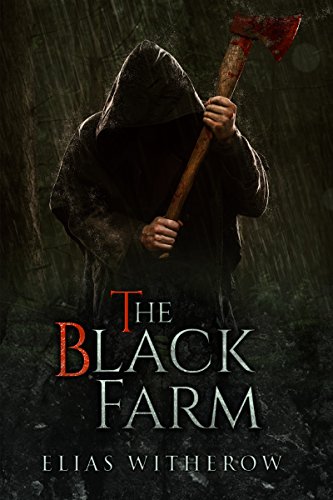
The Black Farm

Contemporary New England author Elias Weatherow started his horror-writing career with online short fiction, and his popularity blossomed as he produced several well-received novels. His masterwork to date is The Black Farm, and I can honestly say that I’ve never read anything quite like it.

Dig the premise:

Nick (our narrator) and Jess are a severely-depressed couple who decide to commit suicide together in one of the grimmest Chapter One openers you’ll ever read. The tragic couple swallows a fistful of pills each and dies in each other’s arms. And then their adventure begins.

Nick awakens, not in heaven or hell, but in a horrific purgatory reserved for suicides. It’s called The Black Farm, and it’s a terrifying place filled with aggressive rotting slugs and a variety of disgusting, murderous creatures. If they kill you, you are simply reincarnated back at The Black Farm to be haunted, hunted and abused for an eternity.

The administrator of The Black Farm is a disgusting, corpulent creature called The Pig. The only way out of The Black Farm is to allow yourself to be eaten by The Pig which allows you to move onto another realm that may be better or worse than the farm. Tough choice.

For his part, Nick chooses to try to survive the horrors of this dark fantasy hellscape in hopes of reuniting with Jess and somehow protecting her in a way that he was unable to on Earth. Over time, the novel adopts the story arc of a men’s-adventure paperback of the 1970s in a dark fantasy setting with Nick on an armed mission to save a damsel in distress from an army of bad guys.

The author is a vivid extreme horror writer who set this novel in a dark fantasy otherworld allowing him to spread his creative and perverse wings. The world-building is simply fantastic. The violence and gore are indeed extreme. Torture scenes are bookended by bone-crunching fight scenes and non-stop action.

If you can handle some stomach-turning scenes, you’re bound to appreciate The Black Farm. The author has also written a sequel, which I will one day read and review. First, I need some earthbound violent adventures before I partake in more of The Pig’s nightmare world. Highly recommended.

Buy a copy of this book HERE.

Monday, December 11, 2023

Pirate's Lair

I'm always searching for the next great sea-adventure. In my quest for a good nautical romp, I started thumbing through digital copies of Blue Book from the early 20th century. I found a copy of the October, 1933 issue, featuring an incredible cover painting by Joseph Chenoweth, and decided to try a story called “Pirate's Lair”. It was written by Arthur D. Howden Smith, a prolific pulp writer for the magazine Adventure, who created a number of popular serials featuring characters like Captain McConaughy, Swain the Viking, and Grey Maiden

“Pirates Lair” introduces Captain Cahoon, a courageous New England ship-captain of the Cotuit Lass schooner. The ship is off the coast of Cuba when it is assaulted and boarded by a cutthroat crew of pirates captained by Gomez, a vicious scoundrel that the crew members call “One-Eyed”. After lining up Cahoon's crew, Gomez's men tie all 18 sailors and two boys with their hands behind their back. Cahoon knows what is to come, the dreaded “over the side” dumping as each man is thrown from the ship to drown in the ocean depths or to be mauled by hungry sharks. This part of Smith's story has such a profound impact on Cahoon and the readers – he's the last man that Gomez pushes off. As each man hits the water, splashing and gasping for air, Cahoon can hear the men's voices in his head and the mothers of the boys that asked that Cahoon look after their babies on the voyage.

The narrative moves into a more gritty, action-oriented second act as Cahoon, the last man over the side, dives deep into the water and brutalizes his lungs in a desperate swim to the pirates ship. By using a piece of their ship underwater, Cahoon is able to free his bonds. Through the evening, he swims to the shoreline to discover the pirates lair, a small village that the bastards use to drink, fight, and rape various women they have enslaved. Like a mean and gritty Mack Bolan revenge yarn, Smith's narrative explodes into a frenzy as Cahoon goes after the men who killed his crew and burned his ship. Only Cahoon isn't empty-handed. Instead, his weapon of choice is an axe.

Man, “Pirates Lair” was absolutely awesome. Smith can write his ass off and was able to inject so much emotion and doom into the opening pages that it sparked off a white-hot firestorm as the book kicked into the revenge tale. I truly felt for Cahoon's character and how much the loss of his men and ship decimated his soul. I also loved how Smith finished the story with an introspective thought as Cahoon questions the night's events. 

You can read this awesome story for free on archive.org HERE or stream it below:

Saturday, December 9, 2023

Spawn of Blackness

Carl Jacobi (1908-1997) authored short stories for the pulps like Doc Savage, Weird Tales, Thrilling Wonder Stories, and Top-Notch. Many of his tales were compiled into short story collections published by Arkham House including Revelations in Black (1947), Portraits in Moonlight (1964), and Disclosures in Scarlet (1972). My first experience with the author was his short story “Spawn of Blackness”, which was originally published in the October, 1939 issue of Strange Stories

The story begins with a ferocious pace as Dr. James Haxton, the story's protagonist, is introduced as racing through the city streets at midnight to answer a disturbing call from his old friend Stephen Fay. Haxton had received a call from his friend that something terrible had happened to him and that he needed urgent medical help. 

Arriving at Fay's home, Haxton and readers are brought up to speed on the astonishing events that have led to Fay lying in a bloody heap. From his bed, Fay explains that he had taken a trip to a South African village. While there he purchased a small wooden statue of a large rat. Upon returning to the US, he showed the statue to an anthropology expert that recognized it as a religious fixture used by a tribe in New Guinea. Learning of its history, Fay dropped an old piece of black cloth over it. But, sometime in the night, the rat came alive and burrowed through the wall. Fay describes it as “...a gray shape and a head with red eyes and white gleaming teeth.” The rat creature threw itself at Fay ripping and tearing.

“Spawn of Blackness” wasn't particularly scary, but it was a real pleasure to read. Jacobi's approach is more of the arm-chair detective style as the hero Haxton tries to solve the mystery behind the savage rat attacks. Is the rat real or some figment of the overworked scientist? The author also included some great usage of colors, particularly the scientific approach of black absorbing all of the primary colors. There's some use of the concept that is crucial to the story's ending. Overall, a very entertaining story.