Saturday, November 25, 2023

Solomon Kane - The Skull in the Stars

One of Robert E. Howard's most iconic characters, along with Bran Mak Morn, Conan, and Kull, is Solomon Kane. The character's first published appearance was in a short story called “Red Shadows”, which was published in the August, 1928 issue of Weird Tales. Mixing sword-and-sorcery and horror, Howard's Solomon Kane stories feature a late 16th century Puritan who adventures around the world fighting evil. 

My introduction to the character is the January, 1929 issue of Weird Tales which features a Solomon Kane short called “Skulls in the Stars”. In the story, Kane is departing a small town in England and is faced with two separate roads to reach his next destination, a village called Torkertown. In the opening paragraph, Howard offers one road as a shorter, more direct route for Kane across a barren upland moor and the second option as a longer tortuous route through a dreadful swamp. Debating the decision, a boy passing by warns – downright prohibits – Kane from taking the moor road. He urges that Kane avoid the moor road because it is haunted by some sort of foul horror that claims men for his victims. Naturally, the adventuring Kane decides to travel the moor road.

Providing any additional insight into this story may spoil your enjoyment, so I'll stray from further plot points. But, Howard's story is just an exceptional blend of supernatural horror and the traditional monomyth of a hero's journey through danger. The author's descriptions of horrifying things lying in wait along the isolated, non-traveled road is superb. I love this:

“Then the thing began to take on shape, vague and indistinct. Two hideous eyes flamed at him – eyes which held all the stark horror which has been the heritage of man since the fearful dawn ages – eyes frightful and insane, with an insanity transcending earthly insanity. The form of the thing was misty and vague, a brain-shattering travesty on the human form, like, yet horribly unlike.”

What I really like about the Kane character, which I'm introduced to in this macabre tale, is his use of two long pistols as well as a rapier sword. There is a unique dynamic approach to the hero's skill-set, which will introduce yet another weapon to his repertoire – a magical staff – in future stories. He's a Puritan, with an eye for injustice and evil and a heart dedicated to the power of all things good. 

With just one story as my trial size, I can see why this character receives so much admiration and loyalty. “Skulls in the Stars” is one of the finest stories I've read this year. Highly recommended!

Buy a copy of this book HERE.

Friday, November 24, 2023

Winter Chill

Joanne Fluke, John Fischer, Gina Jackson, Kathryn Kirkwood, and R.J. Fisher are all pseudonyms of Minnesota author Joanne Fischmann Gibson (b. 1943). In the 1980s, she used the name Jo Gibson to write young adult horror books like Dance of Death, My Bloody Valentine, and Slay Bells. My first experience with the author is her novel Winter Chill, originally published by Dell in 1984. The book was reprinted by Kensington in 2013 as a mass-market paperback and now exists in both physical, audio, and digital editions.

The book begins with Dan Larsen playing in the snow with his daughter Laura. The two are buzzing through the Minnesota powder on a snowmobile when Dan runs into a snow-covered plow. The accident leads to Laura's death and Dan's permanent paralysis. This opening chapter also introduces readers to Dan's wife Marian, who becomes the main character.

To help his wife's mourning, Dan comes up with the idea of writing little notes to Marian pretending to be Laura's ghost. Things like, “I'm in a happy place now Mommy”. It is just as weird as it sounds, and I had to suspend my disbelief that Marian, a teacher that had her own daughter as a student, couldn't recognize that this was Dan's handwriting. But, in bypassing the nitpicky stuff, I carried on.

Throughout the narrative, the kids in the tiny Minnesota town are being murdered by a shadowy killer. Two kids die in a garage when the killer turns the car on and closes the door. Little Becky is sawed to death in an icehouse. There's a throat-slashing on a snowy hill. You get the idea. It isn't nearly as compelling as an 80s slasher flick (or knock-off) because the dread and terror is simply stripped from the soggy narrative. The book's main focus is Marian's grieving, which sort of makes sense when the killer is unveiled, but the plot is buried in Dan adjusting to paralysis and Marian reading made-up messages from her dead daughter. I found Sheriff Bates the most interesting character, but he's third-string.

Despite a great cover, and back-cover synopsis, Winter Chill is a Winter Bore. Unlike Dan, proceed with caution.

Buy a copy of this book HERE.

Wednesday, November 22, 2023

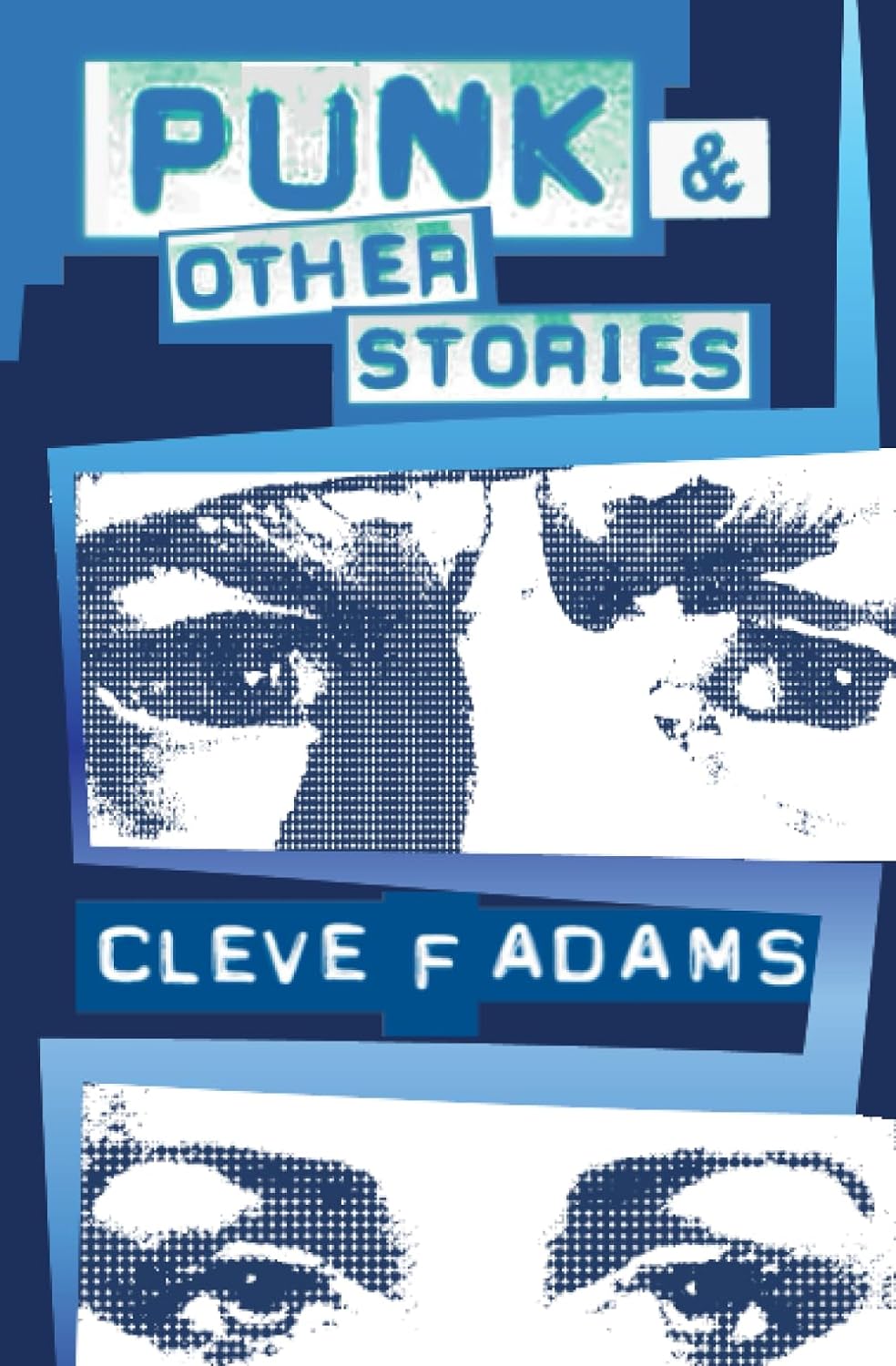
Punk & Other Stories

Cleve Adams (1885-1949) was a hardboiled crime-fiction author for the pulp magazines whose premature death robbed him from seeing his work be rediscovered in the paperback era. Author and literary scholar Ben Boulden has resurrected four of Adams’ best novellas from 1937-1941 into a modern volume called Punk & Other Stories. I’ve heard good things about Adams’ writing, so I was excited to dive into the title story from the March 1938 issue of Detective Fiction Weekly.

“Punk” is narrated by Jerry, whose job is collecting coins from slot machines and pinball games located in disreputable taverns. Jerry has two childhood friends: Big Ed, a local hood who owns the machines Jerry services and Slats, an honest police detective.

About a month ago, Jerry murdered a guy who also used to work for Big Ed. The cops are looking for the dead guy and suspect foul play. There’s a lot going on in this novelette: a love triangle, political corruption, more murders, mutilation, a frame-up and lots of hardboiled, tough-guy patter.

Adams was a solid writer with an ear for dialogue, and his style never slips into parody (like, say, Robert Leslie Bellem’s Dan Turner: Hollywood Detective). Like a lot of pulp writing of the 1930s, the novella is over-plotted with way too much happening. To his credit, the author does a nice job keeping all the plates spinning. It’s also plenty violent and action-packed with a tidy ending.

I’m thankful that a forward-leaning editor put this collection together, and I intend to dip back into it in the future. For reference, the other novellas are:

“Default With Doom” (1937)
“Frame for a Lady” (1938)
“Forty Pains” (1941)

Buy a copy of the book HERE.

Monday, November 20, 2023

Little Sister

Robert Martin (1908-1976) wrote a fair amount of crime and mystery paperbacks under his own name as well as the pseudonym Lee Roberts. Little Sister was a 1952 stand-alone Fawcett Gold Medal hardboiled private-eye paperback that has been reborn as a Black Gat reprint, including an insightful introduction by Bill Pronzini.

Our narrator is Private Detective Andrew Brice, and he is summoned to a new client meeting at a large estate. His client is a wealthy, attractive woman named Miss Vivian Prosper who has just gone through a financially-advantageous divorce. Vivian shares the lakefront mansion with her little sister, Linda — and since the novel is called Little Sister, you probably saw that coming.

Little Sister Linda is a 17 year-old whiskey-swilling hellion, and she stands to inherit a pile of money from a trust fund soon when she reaches 18. Linda intends to marry a 30 year-old gas station attendant, and Big Sister Vivian wants PI Brice to break up the romance because the loser boyfriend is clearly just trying to get his claws on the trust fund cash.

All of this is conveyed in the Chapter One meeting between Brice and Vivian. The reader sees where this is going, and then Little Sister Linda arrives home in her convertible, drunk-as-a-skunk with a dead body in the trunk. And THAT’S how you start a private eye paperback.

As a licensed professional, Brice is duty bound to report the corpse in the trunk to the police, but sexy Vivian has other ideas. Could the prospect of getting laid with the seductive divorcee possibly convince our PI to dispose of the body with no police involvement? That’s the kind of thing that could turn a hardboiled private eye mystery into a femme fatale crime noir paperback.

You’ll need to read the book to find out how Brice handles this and other dilemmas he confronts throughout this lean paperback. The plot eventually settles into a pretty standard PI mystery with Brice interviewing one witness after another until the situation becomes both more clear and more messy as red herrings arise. It’s all well-written with a sexy undercurrent thanks to the seductive sisters at the eye of the storm and the fact that every female interviewee throws themselves at Brice.

The climactic conclusion is a scene where the villain, now revealed, explains the motivation and execution of the murder in painstaking detail while holding a gun on Brice. It’s an overused trope in mystery fiction, but well-executed in this case.

And that’s the thing with Little Sister. This paperback breaks zero new ground for a private eye mystery of the 1950s. However, if you’re in the mood for a completely traditional and readable genre paperback, you could do a lot worse. It’s about as good as a better-than-average Mike Shayne novel. 

Buy a copy of this book HERE.

Saturday, November 18, 2023

Conan - The Thing in the Cave

We've proven time and again that nothing is really off the coffee table here at Paperback Warrior in terms of books. We've covered graphic novels, magazines, paperbacks, hardcovers, and even audiobooks. So, why not a Little Golden Book review?

Chances are you've probably held a Little Golden Book at some point in your life. There are thousands of them. The first one was published in 1942 as a project of Georges Duplaix, then head of Artists and Writers Guild Inc. as a follow-up to the publishing concept of A Children's History. At the end of the first year, Simon & Schuster had a runaway hit with 1.5 million books sold. In 1958, Simon & Schuster sold Little Golden Books to Western Publishing, which then later sold it to Random House. 

I remember owning a lot of second-hand Little Golden Books, including some that were Golden Melody Books that played songs. But, my fascination was on the Golden Books special line of male-oriented titles published as A Golden Super Adventure. These special books, published in the 1980s, focused on toy-line franchises that often shared an animated children's television show. Brands like Masters of the Universe, Princess of Power, Centurions, Mask, Defenders of the Earth, and Adventures of the Galaxy Rangers

As a fan of Conan, I stumbled upon the lone Golden Book dedicated to the barbarian hero, The Thing in the Cave. It was originally published in 1986 as part of the Golden Super Adventure line. The book's cover was painted by the great Gino D'Achille (Fu Manchu, Barsoom, Flashman) while the interior pages were illustrated by the equally great Dan Adkins (Doctor Strange, Eerie, Creepy). 

Conan fans may remember a short story titled “The Thing in the Crypt”, which was authored by Lin Carter and L. Sprague de Camp and first published in the 1967 Lancer paperback Conan. This Little Golden Book publication, The Thing in the Cave, is a reworking of that story. It was authored by Jack C. Harris, a prolific comic book author and editor that worked for DC Comics penning titles like Wonder Woman, Supergirl, Batgirl, Robin, and the graphic novel Batman: Castle of the Bat. After leaving DC, Harris freelanced for DC, Marvel, and Darkhorse while also working for a trade magazine for the licensing industry. It was here that Harris received a press release from Golden Books about a series of Masters of the Universe publications being created for the Golden Super Adventure line. Harris connected with a colleague that led him to penning a number of Golden Books including Masters of the Universe, Batman, Dino-Riders, Super Mario Bros., Garfield, and this Conan book.

I would encourage you to read my review for the original “The Thing in the Crypt” (or just read that story). This Golden Book variation stays mostly true to form, but retains some safety measures for the sake of the young reader. In this version, Conan uses the chains to crack the hardened ice, thus allowing the snarling wolves to simply fall away into oblivion. In the original story, these snarling wolves chase Conan to the cave. The cave itself is substituted for the more sinister-sounding “crypt”. Also, the giant sword-wielding monster isn't so much a mummy, but instead is simply an animated statue made from rock. 

At 25-colorful pages, this was a fun little visual jaunt into “The Thing in the Crypt”, a fun, yet criticized story inspired by Robert E. Howard's literary work (mostly because it is the first story in the Conan paperback and is missing REH). My guess is this Conan title was inspired by the many Golden Book publications featuring He-Man and the Masters of the Universe. Nonetheless, this is a great collector's item and worth a couple of twenty-dollar bills for the pure nostalgia.

Buy a copy of this book HERE

Friday, November 17, 2023

The Sins of War

 John Rester Zodrow was a screenwriter of made-for-TV movies in the 1970s and 1980s who also authored four novels, including a WW2 thriller called The Sins of War, originally published in 1986 and currently available as a trade paperback reprint.

In the aftermath of the Pearl Harbor attack, the U.S. was focused upon filling the president’s request for 70,000 warships and 100,000 tanks. U.S. manufacturers worked around the clock to make this happen — particularly in New York City. The Sins of War is based on a true story about 1942 efforts to prevent the German sinking of newly-minted U.S. warships leaving New York harbor.

The allied victory in World War 2 is now the stuff of legends, but the early days of the war were anything but smooth. The U.S. and our friends suffered Naval defeats in Guam, the Philippines, Burma, and throughout the seas. Meanwhile, ships leaving the ports along the U.S. east coast were regularly sunk by German submarines waiting offshore, killing American troops and destroying supplies en route to our soldiers overseas. It was a grim dilemma, and the U.S. Navy was stymied in their efforts to stop it.

Meanwhile, in the book, a German-American secretive organization called The Bund are quietly loyal to Hitler and sabotaging the ships under construction through acts of terrorism and arson. Someone needs to do something, or America will be neutered in our efforts to save the world.

In the novel, President Roosevelt comes up with a plan: Have the New York Mafia patrol the waterfront ports where the warships are constructed looking for any signs of German saboteurs. Rather than having the U.S. Navy negotiate this deal with the mafia, the President tasks Roman Catholic Archbishop Francis Spellman to handle the deal since the mobsters are likely all Catholic. Roosevelt dubs the plan “Operation Underworld.”

Our hero is a welder in New York named Nick Remington working to secure the metal paneling on ships bound for the war in the seas surrounding Africa. Before becoming a welder, Nick was a Catholic priest driven from the clergy in the wake of a financial scandal. Nevertheless, the Archbishop chooses Nick to be the go-between with the mob and the Navy to coordinate the protection of the ports.

Along the way, there are conflicts and cooperation with Lucky Luciano’s New York mafia, a German social club in New York serving as a counterintelligence squad for Hitler, and a sexy military lady who partners with our defrocked priest to get the job done. Trust me, it’s a wild ride.

The author wrote the novel in the style of a propulsive men’s adventure paperback with short chapters — 70 of them over 300 pages — and pulpy dialogue with limited character development. The Germans are cartoonishly-evil and the Mafia characters are all walking stereotypes. To his credit, the author did not make this a faith-based novel as the characters find themselves in graphic sexual and extremely-violent situations. The action scenes are remarkably vivid and exciting.

This paperback is so much fun to read. It’s an audacious bit of historical fiction begging for a Hollywood adaptation. The reader can’t help but want to know more about the reality surrounding the implementation of this audacious plan. It seems that the facts largely came from a 1977 non-fiction book called The Luciano Project: The Secret Wartime Collaboration of the Mafia and the U.S. Navy by Rodney Campbell.

The climactic ending was a fun series of harrowing adventure set pieces similar to something you’d read in a Doc Savage pulp story. Overall, The Sins of War was, without question, one of the finest adventure novels I’ve read this year. Highest recommendation.

Buy a copy of this book HERE.

Wednesday, November 15, 2023

The Magpie Coffin

The genre “splatter western” came to fruition when Patrick C. Harrison III of Death's Head Press made it a company goal to release a series of western trade paperbacks featuring explicit violence and gore. There have been at least 13 paperbacks published by Death's Head Press as their “splatter western” offerings, but countless others have appeared from various self-published authors and small publishers. I've always enjoyed the western genre, so I borrowed a friend's copy of The Magpie Coffin (2020). It was written by Wile E. Young and represents the very first Death's Head Press splatter western title published. 

The Black Magpie is the book's anti-hero protagonist, a moniker heaped upon a notorious outlaw named Salem Covington. He's an American Civil-War Veteran that prowls the wild frontier (for reasons never really disclosed) killing and torturing bad people (?). He collects pieces of his victims – pieces of flesh, scraps of clothing – and uses them in black magic rituals to gain power. He possesses a gun that apparently (and magically) doesn't miss and it is revealed that Covington can't be killed by bullets. So, who the Hell is he then?

That's the part that Young never really dishes out to his reader, and that's the most frustrating part of the book's narrative. For reasons unclear to me, the author only provides hints of Covington's backstory and life purpose. For example, there is a brand of some sort below Covington's eye that provokes stark fear for anyone that sees it. But, what is it? Young really doesn't elaborate. There's an entire scene in the book where readers finally have the opportunity to learn more about Covington's mission when he meets “the coffin maker”. This man has some sort of history with Covington, but nothing specific is ever mentioned. It's all incredibly frustrating and senseless.

The Magpie Coffin's narrative features Covington on the revenge trail for the group of killers that murdered his mentor, a Comanche shaman named Dead Bear. Covington locates Dead Bear's corpse (far too easily) and puts him in a coffin wrapped in chains. But, Dead Bear is still somehow alive spiritually, which begs the question on why Dead Bear doesn't just perform his own revenge. Nevertheless, Covington rescues a young Union soldier and a prostitute and takes the two with him on a quest to hunt down the killers.

If you enjoy graphic violence often found in the horror and splatterpunk genre, then the sheer levels of brutality should be a pleasure for you. Like I wrote in my review for Suburban Gothic (co-wrote by a splatter western author Bryan Smith), the details of raping a corpse, scissoring off testicles, or sewing lips shut does nothing for me. It's all shock and awe, which isn't a satisfying substitute for a riveting story. There's not enough left in The Magpie Coffin contents to warrant a compelling read. This is standard volume feedback with gore. Nothing more, nothing less. Skip it.

Buy a copy of this book HERE.