Thursday, September 1, 2022

Predator - Concrete Jungle

Nathan Archer was a pseudonym employed by science fiction and fantasy author Lawrence Watt-Evans for the publication of a 1995 media-tie in paperback, Predator: Concrete Jungle. The book was based on the 1989 Dark Horse Comics graphic novel with the same title by Mark Verheiden, which was based on the popular 20th Century Fox movie franchise.

The story is set in New York City during a severe August heat wave. Our heroes are two jaded NYPD homicide detectives named Rasche and Shaefer. The pair used to be narcotics officers, and they were transferred to the murder detail after some excessive force issues. If you’re a fan of fictional excessive force, this is the novel for you.

One night, a gang summit is ambushed and the cops make it to the tenement to find skinned gang-banger corpses hanging upside-down from the ceiling joists with their blood draining onto the floor below. It’s a grisly scene, and the cops fail to initially understand the severity of the threat. Of course, I knew who did it, but I had the benefit of seeing the cover of the paperback.

Rasche and Shaefer are stereotypical 80s movie cops at war with their own ignorant management hell-bent on covering up and minimizing the pending bloodbath to be unleashed on the city. The U.S. Army also gets into the containment and the denial act with all the ineptitude you’d expect from a genre story resting heavily on action movie tropes.

The upshot, as you know, is that Predator monsters from outer space are hunting humans in New York City armed with invisibility shields, energy cannons, pocket nukes, and deadly blades to filet their prey. Fans of the original Predator movie starring Arnold Schwarzenegger will be pleased with some Easter eggs tying this novel directly to the inaugural film.

The writing is mostly satisfactory. The action scenes are vivid and bloody in a plot that moves at a fast clip over 300 big-font pages. The dialogue is embarrassingly bad, but never bad enough to give up on the paperback. If the concept behind this media tie-in paperback appeals to you on any level, I promise it won’t disappoint. Recommended. 

Get the book as part of a three-book omnibus HERE.

Wednesday, August 31, 2022

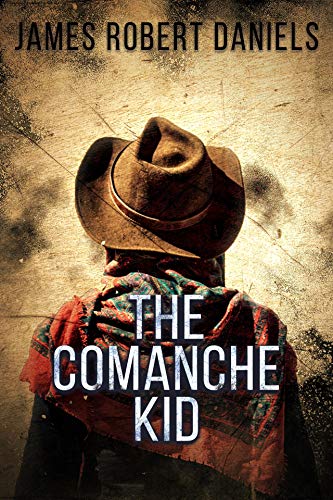
The Comanche Kid

James Robert Daniels is a professional actor and director that performed and wrote for theaters like Shakespeare and Company, Cleveland Play House, Kansas City Repertory, and Asolo. He performed at the Kennedy Center, and contributed to Shakespeare festivals in Illinois, Texas, and Oregon. Daniels served in the infantry in the Vietnam War, and used some of his military experience in his first novel, The Comanche Kid. The western was published in 2021 by Cutting Edge Books

The book begins with one of the more powerful opening paragraphs I've read:

It was early spring when the ocotillo was in bloom that the raiders come down on us and killed everyone but me and Sally. I remember the ocotillo because the tiny red blossoms looked like splattered blood, even though the rains had washed most of the real blood into the earth by then. 

The narrator is Jane Fury, a 16 year-old girl who survives a Comanche attack that savagely kills her parents and brother. In the melee, her sister Sally is taken captive. After burying her family, Jane tracks down some of the murderers, killing four of the raiding party with her father's rifles. Her primary goal is to find and kill her mother's rapist and murderer, a Comanche warrior deemed One-Eye.

After five action-packed chapters, the novel settles into a literary, coming-of-age tale when Jane, disguising herself as a 14 year-old boy (nicknamed The Comanche Kid), herds her family's remaining cattle into a larger and longer cattle drive. The comparisons to Larry McMurtry's Lonesome Dove are probably found here, the inevitable long and winding trail drive that forces the cowboys, and Jane, into battles against nature, each other, and the Comanche tribe. In this regard, I would also compare it to Ralph Compton's successful Trail Drive series.

On the Six-Gun Justice Podcast, Daniels explained to host and author Paul Bishop that he was influenced by Clair Huffaker's The Cowboy and the Cossack. The concept of a long cattle drive developing characters, personalities, and story helped define the style and framework of The Comanche Kid. Additionally, the author explained that the copious amounts of profanity in his book was something he personally experienced during his military career. Cowboys used coarse language, and the book is more realistic because of it. Daniels' love of Shakespeare is a large portion of the book's dialogue, central to a character nicknamed Shakespeare and his romantic chemistry with Jane.

My personal takeaway from The Comanche Kid is twofold. One, the book is certainly a traditional western tale, falling into one of only a handful of possible genre plot devices - the cattle drive. I enjoyed the thirst for revenge and the extraordinary action sequences that brought the revenge to fruition. But, it's a long journey between points A and B, and by page 300 I was simply worn out. I think I needed something a little more to keep me turning the pages. 

Thankfully, the second, and most prevalent aspect, is that The Comanche Kid is a conversation between Jane and God. This was the unique, most compelling portion of the book. Jane was raised as a God-fearing Christian, but struggles with her beliefs and faith after her family's murder. Throughout the book, she questions God, demands that her questions be answered, and walks a balance beam of faith and non-belief. I thought this challenge for forgiveness, retribution, and the struggles of devotion carried the narrative into a thought-provoking realm of enjoyment.  

If you enjoy sweeping, more epic western novels, then The Comanche Kid is your ticket to escapism. Daniels provides a sense of stirring adventure while successfully capturing an authentic, violent portrait of life on the frontier. Recommended. 

Buy a copy of this book HERE.

Tuesday, August 30, 2022

Jerry Long #01 - Code Three (aka Dead Shot)

James M. Fox was actually Johannes Matthijs Willem Knipsheer, a Dutch author born in 1908. He moved to Los Angeles after WWII and started writing mystery novels. His best known work is the Johnny and Suzy Marshall series, published between 1943-1957. My first experience with Fox is his three book series of police procedural novels starring Detective Sergeant Jerry Long. To test the waters,  I tried the series debut, Code Three, originally published in hardcover by Little Brown in 1953. It was published as a paperback in 1955 by Bantam under their Pennant Mystery brand (P79). At some point the book was also published as Dead Shot

Jerry Long, and his partner Chuck Conley, are called to the scene when a dead body is found under a tree in the park. The dead guy's gruesome appearance suggests he had been given the boots by some tough guys and then dumped. The only identification is a tattoo, which prompts Long to call his buddy at the precinct's records department to inquire about it. 

The dead guy is identified as a local bookie, so Long pursues the guy's ex-wife, a fleeing woman named Jenny, to get some answers. When he drives up to her apartment, guns explode and the woman runs for safety. Later, Long connects the clues that lead to a powerhouse mobster named Manny. Where the book gets really interesting is that Long, who's a city detective, collides with the county sheriff's office. The tug-of-war is one of those “you're traipsing on our turf” territorial disputes. However, Long finds evidence that Manny is controlling the county cops, which forces him on the outside of the investigation. 

Code Three reminded me of a 1958 paperback called City Limits, the second installment of the Mike Macauley series written by Richard Deming using the pseudonym Nick Marino. The central plot of the city versus county law enforcement is similar, complete with the mobster and the hero colliding. Typically, these story elements are often found in crime-fiction detective novels. Adding to the gritty, hardboiled style, I found Fox's writing similar to Mickey Spillane – blood and guts, tough guy talk with fisticuffs, babes, and cold steel. 

My major drawback to Fox's Code Three is the story seems jumbled, fragmented, and often dense in the details. I had a very hard time understanding what was happening, and couldn't quite comprehend the flow of events. Even at a relatively short 120 pages, I struggled to finish this book. I found myself counting pages, which is a surefire signal that I'm completely lost. I love the main character, found his tactics compelling, but the plot development and presentation was jarring. I'm not giving up on Fox with just a small sample size. But, surely you can do better than Code Three if you want to sample the author's work. Buy a copy of this book HERE.
Jerry Long Series

1. Code Three (aka Dead Shot) 1953
2. Free Ride (1957)
3. Dead Pigeon (1967)

Monday, August 29, 2022

Paperback Warrior Podcast - Episode 100

It's the 100th episode of the Paperback Warrior Podcast! Tom and Eric discuss their favorite moments from the show's past three years as well as the life and literary work of pulp and crime-fiction author Cleve Adams. Reviews include a Matthew Scudder installment by Lawrence Block and a 1957 vintage paperback called Sin Pit. Listen on any podcast app, paperbackwarrior.com or download directly HERE. Additionally, you can watch the video version of this episode on YouTube HERE.

Friday, August 26, 2022

Timothy Dane #03 - The Diary

William Ard (1922-1960) was a popular author of mystery and western fiction during the 1950s whose nine-book series starring Timothy Dane remains highly regarded today. The series can be read in any order and Fiction Hunter Press recently re-released the third installment, 1953’s The Diary, as a $3 ebook.

Dane is a fairly typical 1950s Manhattan private-eye who is summoned to the home of a wealthy industrialist seeking to engage his services. The client has an attractive 18 year-old daughter named Diane whose diary was stolen. The old man isn’t particularly worried about this, but his daughter is freaking out and wants a PI on the job — so here we are. The suspect is a Spanish Harlem Mexican hood, who apparently stole the journal while doing some work at the estate.

When Dane makes his jaunt into Spanish Harlem, he quickly learns that the gig isn’t going to be as easy as he thought. Lurking in the background of the mystery is the specter of big-city politics and a race between two candidates to recover the diary and its secrets. There’s also a murder, and that’s the real mystery to be solved. Could the contents of a teenage girl’s diary be worth committing a homicide?

Dane’s engagement evolves into a bodyguard duty looking after the horny Diane, and there’s some sexy seduction within the pages of this 69 year-old paperback. Overall, this was a rather enjoyable, if insubstantial, private-eye mystery. While the Timothy Dane series isn’t the high point of Ard’s body of work, The Diary is a solid installment from a prolific young author whose life was cut short way too soon. It’s good to see publishers keeping his body of work alive. 

Buy a copy of the eBook HERE.

Wednesday, August 24, 2022

Visual Feature - David Goodis

Major announcement from the Paperback Warrior camp. After nine years of hard work, dedication, and consistency, we are making some changes. First, Episode 100 is broadcasting this Monday, August 29th. To celebrate this milestone, and to mark our next evolution, the episode will be offered in our normal audio version, available on multiple platforms. However, we've entered the film making business.

Episode 100, and hopefully future episodes, will simultaneously launch as videos available on YouTube and our blog at paperbackwarrior.com. Think of these as interactive, documentary styled films that accompany our audio. You wouldn't want to see us just talking into a microphone, so instead, we've created films showcasing books, pulp magazines, MAMs, author photographs, connected places, and tons of vivid artwork. The video matches the audio, offering you a more interactive experience. In other words...we are conquering vintage paperbacks in a whole new way.

In addition to our new episodes, we are creating and offering Visual Features on some of our favorite authors. These short films highlight our prior podcast features in a brand new way, complete with a visualized experience. 

Seeing is believing, so we have our very first Visual Feature online now! It's on respected crime-noir superstar David Goodis. You can watch below on YouTube, or at paperbackwarrior.com. Direct link is HERE.

World's Scariest Places #05 - Mountain of the Dead

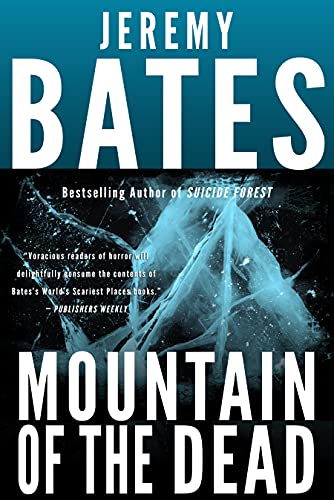
We've covered books by horror author Jeremy Bates, most notably his World's Scariest Places series of stand-alone novels. Each book in this series is based on a particular place that is closely associated with a tragedy, haunting, or unexplained event. Case in point is the Dyatlov Pass Incident, one of the greatest unsolved mysteries of the 20th century. Bates uses this incident and location to place his horror-adventure novel Mountain of the Dead, originally published in 2018 via Ghillinnein Books. 

The book is partially presented in first-person narrative by Corey, a bestselling author of non-fiction. He recounts his harrowing expedition to Russia's frosty Northern Ural mountains, one of the most inhabitable regions on Earth. Corey, and his filmmaker buddy “Disco”, journeyed to the region to research the Dyatlov Pass Incident, a 1959 mystery involving nine Russian hikers that experienced gruesome deaths that can't be explained even within the scopes of modern science and forensics. 

In between Corey's portions of the novel, Bates weaves in events from 1959 concerning the actual hikers that were killed in the incident. Bates takes liberties with the incident and victims to create his own version of the murders, complete with Cryptozoology, actual photos, and a rather doomy title for these chapters counting down the amount of days left to live. It's quite fascinating. 

At 420 pages, approximately 15 characters, and two different timelines, Mountain of the Dead may seem intimidating. Oddly enough, it all blends together seamlessly to create one of the better horror novels I've read in some time. Corey's account of what happened to him in Siberia, the underground laboratory, hideous experiments, and ultimate encounter with the horrors of the Dyatlov Pass Incident were simply awe-inspiring. There's a real sense of adventure that envelopes the story as Corey is partnered with a female scientist, a hunter, and a remote guide to explore and locate the history of the events deep in the rural, icy mountain range. Likewise, Bates presents this same snowy adventure with the original nine hikers in 1959's trek through the high-mountain wilderness. 

As if Bates needed any further elements to propel the plot, there is a through-story arc regarding Corey's girlfriend and the tragedy that affected her years ago. Through life fragments and story pieces, readers learn about her life and, by the book's final chapters, her fate. So, there's an embedded mystery within the mystery. It's wildly clever, unique, and entrancing. 

Jeremy Bates is extremely successful and remains one of the bestselling, self-published authors of his genre. Books like Mountain of the Dead are testimonies to his success as an original, believable, and tremendously entertaining author. I love this guy. 

Buy a copy of this book HERE.