Friday, November 11, 2022

The Assassin #01 - Manhattan Massacre

Peter McMurtin authored the three-book series The Assassin for Dell in 1973. Double-dipping into the cookie jar, the author was also employed to write and edit for rival publisher Belmont. McMurtin cleverly used the character he created in this The Assassin trilogy for his long-running The Marksmen series for Belmont. In The Assassin, the character is Robert Briganti while in The Marksmen the name is simply changed to Philip Magellan. Same guy, same origin. Not to totally sweep-kick readers, but some of McMurtin's Sharpshooter series would feature the same character sprinkled in occasionally as Johnny Rock. 

This first installment of The Assaassin, titled Manhattan Massacre, plays out like your standard 1970s revenge yarn. There's nothing separating it from an early Bolan, or something akin to Death Wish, The Revenger, The Vigilante, etc. In this origin tale, Robert Briganti is introduced as a former trick shooter that worked the carnival circuit. Later, he began selling arms internationally for a firearms company while having some sort of connection to the CIA. Becoming a family man, Briganti settled down in Connecticut to run a sporting goods store.

A mobster named Joe Coraldi stops into Briganti's store and asks for a favor. He advises Briganti that his particular portion of the empire needs weapons. The deal is Briganti will be paid well, Coraldi gets the boom-boom and all is fair in war. But, Briganti declines the generous offer. Coraldi leaves, then later has his goons shoot up Briganti's car on the highway, shredding wife and kid and somehow sparing Briganti. 

Then, two-thirds of the narrative has Briganti arming himself and going after each of the men who murdered his family. The deaths are bloody carpet-soakers with the obligatory leaky heads and destroyed diaphragms. The funny stuff is that Briganti is running around with a monster boner and nearly explodes with one touch from a New York hooker. McMurtin also introduces a wild character named Mwalimu that provides a 14-page lecture to students about alternative history. His take is that Christopher Columbus was black and the reason the slaves willingly came to the U.S. was to get laid by white women. It's nuts, but ties into Briganti's final ploy to kill Coraldi. 

If Manhattan Massacre is a sign of things to come, then I'm in for an obnoxious, over-the-top kill-thrill as I waddle my way through two more Assassin entries before stepping over to The Marksmen. If the target is to be entertained with disposable fiction, then McMurtin scored a bullseye. 

Buy a copy of this book HERE.

Wednesday, November 9, 2022

The Executioner #12 - Boston Blitz

Don Pendleton's The Executioner storms into the American Northeast with its 12th installment, Boston Blitz. After Bolan's flourish of successful run 'n gun tactics on the West Coast, he learns of some troubling news from his old ally and undercover mobster Leo Turrin. Remember Bolan's little brother? That 14 year-old kid named Johnny from the series debut War Against the Mafia? He's been kidnapped from his secretive witness protection blanket at a prep school. Worse, Bolan's “love of his life”, Val, has been captured as well. Remember Val? I don't. But, in looking at the series order, apparently Val was one of three hotties Bolan was banging way back in the debut. I don't remember her since then, but Bolan sure does. 

In one of the strangest novels of Pendleton's early contributions, Bolan invades Boston and kills over 60 thugs over the course of 30ish hours. He guns through the strip joints, gambling dives, whore houses, bars, mobster pads, country clubs, and so forth. None of it is really told in a compelling narrative, only mentioned to the reader as past events. The reader is disconnected from the action. It's an odd book, and a bizarre way of presenting the story. My biggest problem with it is that I still don't know what the book was about as I read the last few lines. 

From what I can gather, there's a criminal named Al 88 that has risen through the underworld ranks to capture some coveted Boston territory. Harry “The Skipper” Sicilia doesn't want this Al dude to start grabbing huge swaths of prime real-estate, so he kidnaps Johnny and Val to lead Bolan to Boston to start mowing down baddies. Or, did Al 88 kidnap Johnny? None of these people are featured as actual characters in the book (that I can remember), only names dropped in fragmented dialogue. There's Al's wife thrown in the mix that loves her husband, but then helps Bolan's execution. Also added for laughs (?) is this Books Figarone, “Attorney-to-the-Mob”, fellow that Bolan saves and uses as a ploy to lead more mobsters to the chatter gun. 

Boston Blitz isn't particularly memorable, but features some old names that we haven't seen in Bolan books for a long time. There's also a mention of Hal Brognola to part the seas and guide Mack Daddy to his next destination, Washington D.C.'s Capitol Hell. Wait, that was a Penetrator novel. But, yeah, D.C. is next for Bolan. 

Buy a copy of this book HERE

Monday, November 7, 2022

The Smuggled Atom Bomb

Philip Wylie (1902-1971) was a prolific author of the pulp era whose fiction inspired the creation of the characters Superman and Doc Savage. His 1948 thriller, The Smuggled Atom Bomb, has been reprinted many times over the past 70 years and remains available today.

Duff Bogan is a boarder in the home of the wheelchair-bound widow named Mrs. Yates. Duff is a Physics grad student at the University of Miami, and he loves doing housework and landscaping for Mrs. Yates for reduced rent. The household also features a beauty queen daughter named Eleanor (you see where this is going immediately) and a mysterious tenant named Harry who works for a trucking company.

One day while cleaning the house, Duff notices a new lock on the closet door in Harry’s room. Conveniently for the novel’s plot, Duff is also an amateur locksmith hobbyist. As such, he easily breaks into Harry’s closet where he finds, hidden inside a hatbox, what appears to be a metallic container filled with uranium and what appears to be the core of a small atomic bomb. Could the quiet tenant be a spy or a terrorist?

Duff shares his suspicions with the lovely Eleanor and makes an appointment with the local FBI field office. The special agent conducts a preliminary inquiry and comes to the conclusion that Duff was likely mistaken in his assessment. This basically leaves Duff and Eleanor to solve the mystery themselves - just like an Encyclopedia Brown/Nancy Drew crossover.

Despite the sweet innocence of the amateur sleuthing, Young Duff does a nice job following logical leads in a high-stakes situation. Thankfully, things become a bit more edgy as the story unfolds. The dirty bomb conspiracy was solid, but the interpersonal drama between Duff, Eleanor, and her myriad of suitors was a teen-drama snooze.

The Smuggled Atom Bomb is a basic and straightforward thriller for the easy-reading crowd. The story held my interest, but no one will mistake this for a genre classic. It’s interesting how enduring the paperback has been with multiple reprints over the decades when so many superior works have fallen out of print. At best, this Wylie paperback can be seen as an enjoyable, wispy diversion to be read between more substantial works. 

Buy a copy HERE.

Friday, November 4, 2022

The Searcher

I've been buying a lot of F.M. Parker westerns lately He's an author that seems to have a fairly strong following and consecutively receives good reviews. While I have just read his Coldiron series, I wanted to branch out and try a stand-alone novel. I chose The Searchers, originally published as a hardcover by Doubleday in 1985 and published as a paperback by Signet in 1986 (with awesome artwork by the talented Ken Laager). 

It is 1871 and 16 year-old Sam Tollin is helping his father cut trees in the Pecos River Valley. His 13 year-old sister Sarah is helping her mother inside the family's cabin. Out of nowhere, a band of Native Americans, and white men, ride onto the property and guns start blazing. In a heroic display of parenthood, Sam's mother and father agree to stay behind and sacrifice themselves to buy time for Sam and his sister to ride off. Thankfully, they get away, but the duo is quickly separated and Sarah is taken by Mexican bandits. 

Sam's journey, and the bulk of the book's narrative, transforms into a long rescue mission. However, to get Sarah back, Sam agrees to join a heist crew that is headed to California to steal horses and/or mules. Why is he headed to California instead of Mexico? The heist crew originally plans to kill Sam, but he agrees to join their crew to stay alive. In doing so, Parker strengthens the book's story with an additional element of boy-becomes-man, or the end of innocence. Sam learns the way of the gun and the differences between right and wrong while committing crime. 

The Searcher is similar to a Louis L'Amour traditional western tale with its premise of youngster growing into manhood after a violent encounter and then skirting the edges of criminality in an effort to regain what is lost. It is mostly enjoyable, but at 220-pages I found it to be longer than it needed to be. I'm not a fan of cattle-drive westerns and the travels between point A and B seemed extremely long and mostly dull. The action scenes at the beginning and end were great, but getting there was a bit cumbersome. Parker's injections of little tidbits of frontier knowledge were real highlights to me. 

Overall, The Searcher is a good western story, albeit with less action than I typically desire. Parker continues to be enjoyable and I'm happy that I have at least 18 more of his novels to enjoy. 

Buy a copy of this book HERE

Wednesday, November 2, 2022

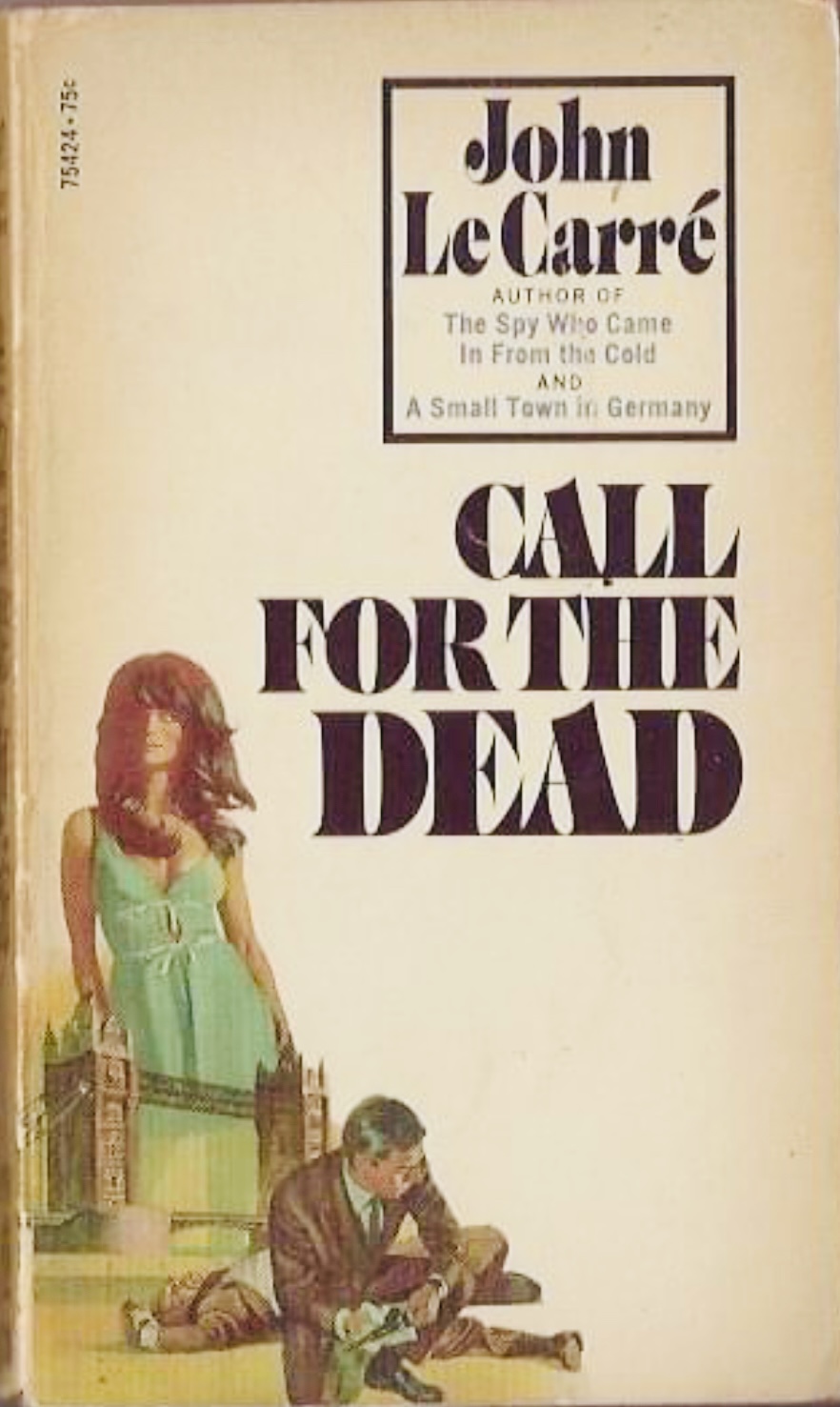
George Smiley #01 - Call for the Dead

John Le Carre’s real name was David John Moore Cornwell (1931-2020), and he is regarded as one of the fathers of British espionage fiction. His first novel, Call for the Dead (1961), was also the debut of his iconic series character, George Smiley. 

The opening chapter is “A Brief History of George Smiley” in which the novel’s hero is said to resemble a poorly-dressed bullfrog. He’s a British Intelligence Officer with the Secret Service and a keen interest in academic incursions into the mysteries of human behavior. He served admirably in Germany during the run up to WW2, recruiting human assets, and now he’s back at the Home Office in London handling administrative tasks including conducting security interviews of employees. In fact, it’s one of those security interviews that kicks off the paperback’s action. 

The Service receives an anonymous letter accusing an operative named Samuel Fenman of being part of a Marxist student organization decades ago at Oxford during the 1930s. Smiley handles the security interview and finds no reason to be concerned with Fenman’s adulthood loyalty to the British Crown. The entire conversation is cordial, and Smiley is satisfied that his Foreign Office colleague isn’t a security threat. 

For this reason, Smiley is shocked a few days later when Fenman is found dead by suicide. The note he left behind cites Smiley’s benign security interview as the spark that triggered him to blow his brains out. None of this makes much sense to Smiley, who is called into the office by his concerned and confused supervisors. They send Smiley to Fenman’s hometown to visit the widow and determine exactly what occurred. 

Smiley quickly comes to the conclusion that Fenman’s death was no suicide, and we have a real mystery on our hands with unknown parties working in the shadows to ensure Smiley fails in his quest to learn the truth. There’s some violence, deceit, and spy tradecraft along the way. 

I’d always steered away from LeCarre’s works under the assumption that his writing was dense, slow and hard to follow. It’s certainly British and written with a level of sophistication beyond a Killmaster paperback, but there was nothing impenetrable about this debut novel. It was a perfectly straightforward murder mystery told with the backdrop of Britain’s premier spy agency. While the motivations of many characters involve espionage, the paperback doesn’t particularly read as a spy novel. 

Worth reading? I suppose so. Le Carre was a good writer, but there was nothing really special about this debut. It was good enough to make me want to read a pure Smiley espionage classic such as Tinker, Tailor, Soldier, Spy. Others have recommended reading Call for the Dead as a prequel after enjoying the author’s superior spy novels. That strikes me as a good idea. 

Buy a copy of this book HERE.

Monday, October 31, 2022

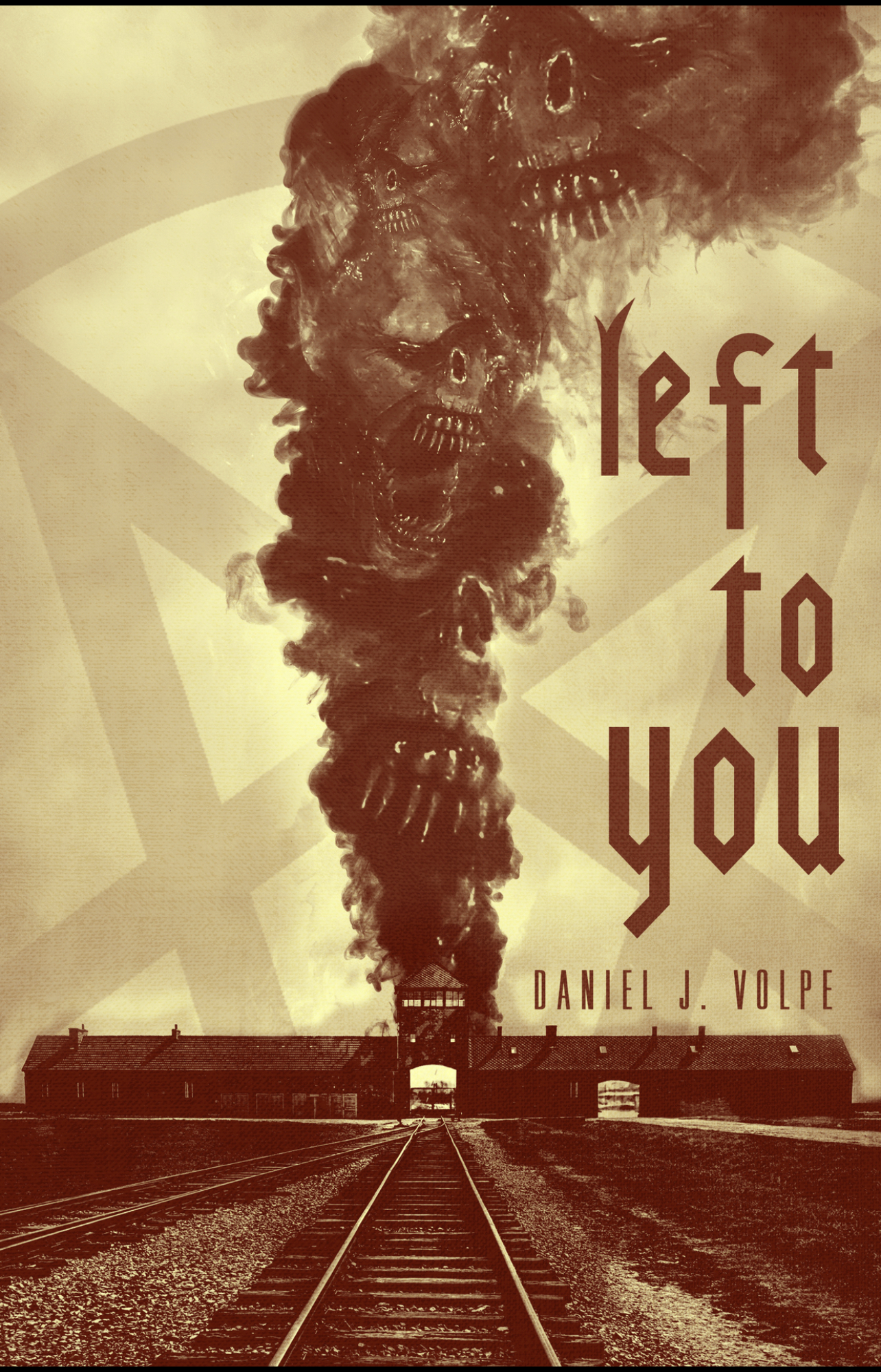
Left to You

Independent American horror author Daniel Volpe created a critical hit in 2021 with his self-published novel, Left to You. The paperback combines a modern-day occult story with extended flashbacks to the horrors of a WW2 concentration camp.

The main protagonist is Robert Sinclair, a twentysomething stock clerk at a big box store who attends community college while caring for his cancer-ridden mother at home. He strikes up an unlikely friendship with an elderly Polish customer named Josef Lazerowitz who, we quickly learn, is a survivor of the Auschwitz concentration camp during WW2.

The reader is treated (?) to an extended flashback to Josef’s time at Auschwitz as a young man. There’s plenty of ripped-from-the-history books horror as the Jews are subjected to murder, torture and indignities at the hands of their Nazi captors. We also learn how Josef survived when so many of his cohorts did not. The dynamic between Josef and the camp leadership was one of the novel’s strongest attributes largely due to the questionable ethics baked into the situation.

There is very little supernatural horror here in the paperback’s first half. If you are good enough at math, you’ll begin to understand that there’s something weird happening with old Josef who does not appear to be aging normally. Leave it at that.

Once we learn how the death camp story ties into Robert’s contemporary story, we are fully in the muck of a gross-out, bonkers, demonic horror novel. The author does a nice job of creating a parallel between the monstrous choices made by men during the war and the real-life monsters of contemporary horror fiction.

This is a very compelling - but very grim - novel that is definitely not for everyone. It reminded me a bit of Stephen King’s Apt Pupil. You need to make peace with moral ambiguity and the idea that stories don’t always need to have a happy ending for everyone. The writing is crisp and you’ll never be bored. But, man, this isn’t for the squeamish. Consider yourself warned. 

Buy a copy of this book HERE.

Friday, October 28, 2022

Zorro: Zorro's Pacific Odyssey #01

Johnston McCulley's Zorro character first appeared in “The Curse of Capistrano” (aka “The Mark of Zorro”), a five-part serial that debuted in All-Story Weekly on August 9th, 1919. For decades McCulley authored stories starring the caped crusader. Spinning off the pulps, Zorro became a pop-culture phenomenon in international television shows and films. Additionally, many authors have taken turns writing Zorro stories and novels, including Susan Kite. The Indiana native authored a trilogy of Zorro novels called Zorro's Pacific Odyssey. The trilogy's first book, Zorro and the Outward Journey, was published by Bold Venture Press in 2022 as both a paperback and ebook. 

Don Diego de la Vega, son of the wealthy caballero Don Alejandro, lives in Mexican governed California in the early 1800s. By day, Diego displays a bit of cowardice to disguise the fact that he is the famed vigilante Zorro. After a series of attacks on prominent citizens perpetrated by terrorists, Zorro rescues a kidnapped child in the mountains. However, days later Diego is captured by the terrorist group, drugged, and then sold into slavery to a British ship headed to Singapore.

When Diego realizes what has happened, he is faced with his fate. The ship's Captain, a horrible individual named Beatty, explains that Diego is an indentured servant that has been purchased for two years of hard labor aboard the ship. When Diego explains the unfortunate incident of the terrorists, his background as an aristocrat, and the kidnapping, Beatty dismisses it as a fabrication. He soon realizes that Diego is quite different and places him as a trustee of the Spanish workers. Additionally, Diego is placed in care of the ship's Supercargo, a man named Bowman. Diego is fond of Bowman and the two quickly establish a father-son type of relationship.  

As the first of a three book series, it is clear that this book is simply the journey. Zorro is being transported from A to B and must contend with the nefarious elements of the ship's crew and his limitations as a slave. I love prison-styled stories and this one certainly fit that sub-genre of men's action-adventure. What makes this such a compelling narrative is the fact that Diego can't transform into Zorro to fight his way out of the situation. He's trapped in a small space without the ability to don a disguise or do battle with a sword (he does later, but I'm not spoiling your enjoyment here). The fact that Diego is ultimately the hero makes this a unique Zorro story. 

While Zorro on the high seas has been done before, Kite's version of this “fish out of water” adventure is very entertaining. It was also an emotional charge reading about the human condition - a panicked, desperate father hunting for his missing son. It was a really effective part of the whole story. There's also an expected cliffhanger that demands the reader to quickly buy the next book. Needless to say, my account has been debited and Bold Venture Press is shipping it out to me as I write this. Money well spent.

 Buy a copy of this book HERE.