Monday, January 17, 2022

The University #01 - Sympathy for the Devil

Sympathy for the Devil is the first in the series of espionage novels by contemporary New York author Terrence McCauley. The novel was originally released in 2015 but has found new life as the inaugural release by Wolfpack Publishing’s newly-acquired imprint Rough Edges Press.

The novel stars spy James Hicks (not his real name). He’s employed by an odd organization informally known as The University. It was created by an executive order during the Eisenhower Administration to operate outside the official intelligence community to protect the USA without federal (or ethical) oversight or funding.

The University gains its power through the recruitment of high-value “Assets” — people with secrets to hide that the agency blackmails into providing expertise, information and resources. Hicks recruits these reluctant assets with information gleaned from The University’s futuristic data analytics computer called OMNI. More on that later.

The day-to-day work of The University is to embed its agents inside suspected terrorist groups with the hopes of preventing acts of terror before they happen. Hicks runs The University’s New York office and oversees these operations. For this series debut, Hicks is dealing with a group of radical Islamic Somalis operating out of a Long Island taxi stand. Somehow the Somalis figured out that they were under investigation, and they stage an ambush targeting Hicks and killing a well-placed undercover operative.

There’s a lot of world-building to give the reader a feel for the intel environment in which The University operates. Nearly the entire first half of the novel is Hicks setting the stage, recruiting help and gathering resources for the mission at-hand. In the novel’s second half, Hicks employs technology, informants, enhanced interrogation and gunplay to investigate the bad actors behind the Somali cell.

My biggest criticism is the author's over-reliance on the agency’s OMNI computer system. The system is all-knowing, all-seeing and completely unrealistic — much like the one in the 1998 Tony Scott film Enemy of the State. The problem is that this trope robs the main characters of problem-solving within the plot. A digital, crystal ball like OMNI takes the story out of the world of hardboiled gritty realism and into the realm of paranoid sci-fi. The computer system also relegates Hicks to the sidelines and in front of a computer screen for much of the novel.

Despite these structural flaws, I mostly enjoyed riding along with Hicks on this adventure. The author is at his best when writing scenes filled with violent action, and there are several of these peppered throughout the paperback - mostly toward the end. When he leaves his laptop behind, Hicks is a great hero and the author is a fine writer.

While I didn’t love Sympathy for the Devil, I’m intrigued enough by the character and the agency to continue with the series. McCauley can write his ass off when he allows his action characters to do action stuff. Mostly, I trust the editorial hand of Wolfpack Press to shepherd this series in the right direction. For that reason, I’ll probably be back for more. 

Buy a copy of the book HERE

Friday, January 14, 2022

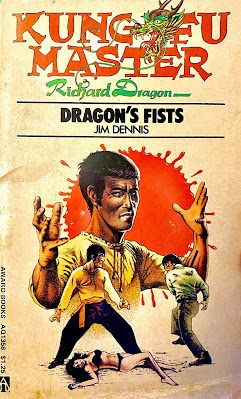
Dragon's Fists

There's an interesting backstory behind the vintage paperback Dragon's Fists. It was published in 1974 by Award Books, a subsidiary of Universal Publishing under the pseudonym Jim Dennis. The novel was actually written by Dennis O'Neil and James Berry. O'Neil was a prolific comic book writer with works including Green Lantern, Amazing Spider-Man, Batman, and X-Men. Berry was a comic strip artist associated with the long-running Berry's World

The 1970s provided a fertile landscape for men's action-adventure paperbacks, so the proposal was for Dragon's Fists to become a series. The title page inside states #1 and the book is a clear origin story. It was designed to propel Kung-Fu master Richard Dragon, the book's main character, into a long-running publication. Unfortunately, the book wasn't a success and Award Books canceled the series. Was the novel that bad?

Through numerous flashbacks, readers learn that Richard Dragon's parents were very wealthy. Dragon, in defiance, wasted his childhood by creating a lot of chaos for himself and the family. He was kicked out of numerous schools and universities and refused to conform to his father's rules. As a young adult, Dragon became a thief in Japan and attempted to rob an older gentleman. The man ridicules Dragon, but finds that he has the ability to do good things if he can change his attitude. This man, referred to as O-Sensei, is a Kung-Fu master. He teaches Dragon martial arts and how to live life in a positive way. 

With his new skills, Dragon joins an espionage agency called G.O.O.D. (Global Organization of Organized Defense) and serves as an agent for a number of years. After he leaves the agency, Dragon becomes a martial arts teacher. In the opening pages, Dragon's friend Carolyn comes to him to ask for help. In a quick fight scene, Carolyn is kidnapped by a male villain named The Swiss. He also murders Carolyn's uncle in a quest to locate a series of numbers.

The bulk of the narrative is spent with Dragon trying to locate The Swiss in Paris. There's a number of violent fight scenes to keep readers engaged, but the story is fragmented due to the flashback sequences. It reminded me of the old Kung-Fu television show where the main character finds conflict and is reminded of some important lesson he learned from his master. The action is great, the story is convoluted, and the pace is jarring. Beyond collectible nostalgia, there probably isn't a reason to hunt this book down.

Fortunately, Richard Dragon continued in comic book format and has become a stable, popular character within the D.C. Comics universe. The character first appeared in comic book format in 1975 under the title Richard Dragon, Kung-Fu Fighter. That series lasted 18 issues. The Richard Dragon series launched again in 2004 and ran 12 issues. Since the 1970s, the character has appeared repeatedly as both a hero and villain. Most recently, Richard Dragon appeared on the television show Arrow and the animated Batman film Soul of the Dragon

Buy a copy of this book HERE

Thursday, January 13, 2022

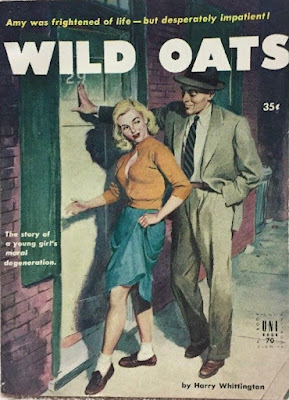
Wild Oats

Florida’s King-of-Paperbacks Harry Whittington (1915-1989) had four paperback original novels published in 1954. One of those included a juvenile delinquent book called Wild Oats that promised “The story of a young girl’s moral degradation.”  The novel was originally published by Uni Books and is now available as a reprint from Armchair Fiction. 

Amy has a troubled background. Her father left her mother for another woman and moved to Tampa, leaving his wife and Amy behind. As the novel opens, 15 year-old Amy is hitchhiking to Tampa to be with her estranged dad. She lands a ride with a creepy trucker who tries to rape her until a trooper intervenes and sends her back home to mom. 

Both Amy and her mom are relatively new residents in the small Florida town of Duval, a sleepy hamlet divided into a caste system with a distinct class-based pecking order. Amy and her divorced mother are toward the bottom, but Mama is hell-bent on some social climbing. Her bright idea is for Amy to befriend the high school’s Alpha-girl, a bitchy teen named Clarice.

Amy quickly befriends the wealthy Clarice and begins to slide into delinquency - booze, cutting school, and pressure to engage in sexual activity as an initiation into Clarice’s No Virgins girl gang. The sex stuff is all off-page and more repugnant than titillating. On the other side of this teen malfeasance is a nice high school boy who thinks Amy is just swell. 

I kept waiting for something interesting or edgy to happen, but the whole thing felt like an After School Special about the dangers of peer pressure. At best, Wild Oats is an interesting artifact from the juvenile delinquent paperback fad. However, the novel is beneath both Harry Whittington and you. Don’t bother. 

Buy a copy of this book HERE

Wednesday, January 12, 2022

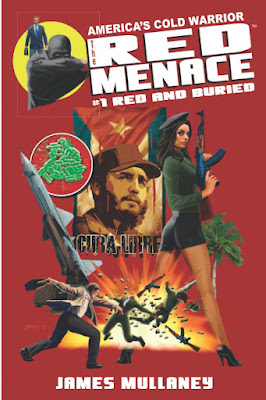
The Red Menace #01 - Red and Buried

Author James Mullaney was born in Massachusetts and has an M&M addiction. To help feed his appetite, he's sold over a million books. Mullaney contributed to 26 installments of The Destroyer and wrote a six-issue arc for Marvel Comics' Iron Fist. In addition, he authors an ongoing series about a private investigator named Crag Baynon. My first experience with Mullaney is his espionage title The Red Menace. At the time of this review, there are a total of five installments. The debut, Red and Buried, was originally published by Moonstone Books in 2013. Bold Venture Press bought the rights to the first two novels and have released them as gorgeous trade paperbacks with Mark Maddox artwork. I've always enjoyed 1970s action-adventure, so I jumped right in.

In the 1950s, Patrick “Podge” Beckett donned a mask and cloak and became a U.S. secret agent named The Red Menace.  Beckett worked for the M.I.C. (Manpower and Intelligence Coordination), a short-lived bureau that was a melting pot of information gained from the C.I.A., F.B.I., Army Intelligence, and other domestic and international espionage and police agencies. By the late 1960s, invisible walls had been structured and these bureaus no longer actively (or voluntarily) coordinated with each other, instead hoarding the intelligence within their own departments. Thus, the M.I.C. slowly became obsolete. 

Red and Buried begins with a prologue set in October, 1958. The Red Menace is in the Soviet Union stopping the plans of Motherland (Russian agency similar to the KGB) to create a biological weapon. Red Menace's chief rival is the Soviet's Colonel Ivan Strankov, the director of Motherland. By the end of the exciting prologue, Red Menace has won the battle and issued a threat to Strankov – don't ever come close to America again...or you'll be dead. 

The first chapter brings the narrative into the present day of July, 1972. Readers learn that after his departure from M.I.C., Patrick Beckett started a lucrative and successful security consulting firm. His days as Red Menace are a distant memory. Beckett now lives a comfortable, luxurious life at the beach. A young man arrives and introduces himself as Simon Kirk, the son of Beckett's old boss at M.I.C. Kirk is now running the department and explains that Beckett's old ally and friend has been killed by the Soviets in Cuba. He was on an assignment there working under the disguise of a fisherman when he located a hidden missile range. Kirk knows he can't get into Cuba, but he can possibly pitch a deal to Beckett. Here's the setup:

Beckett will take on an assignment for the M.I.C. and figure out what's going on in Cuba. But, he needs to be invited there personally. Kirk knows Beckett declines business opportunities from any Communist country. But, he suggests that Beckett propose a security consultation with a dictator in Uganda. After setting up security forces for Uganda, that nation will spread the word that Beckett has finally placed money before his personal ethics. Then, Fidel Castro's people will invite Beckett into Cuba to analyze their security measures. Once he is there, Beckett will have free reign to snoop around and find the missiles. Or, Castro will personally invite him to the launch pad to consult with the Soviets. 

All of this may seem convoluted, but it is rather simple. Mullaney places pure enjoyment and humor over technical nuances about 1970s weaponry. In doing so, he makes Red and Buried such a pleasure to read. Beckett's partner is Dr. Thaddeus Wainwright, a hilarious character that is sarcastic and intelligent. The pairing is similar to The Destroyer's Remo Williams and Chiun, an obvious influence on Mullaney's writing style and concept. The narrative is propelled by laugh-out-loud moments with Wainwright frequently ridiculing Fidel Castro's dictatorship. In terms of action, it's almost nonstop once the story gets rolling. Even in the slower parts, there are flashback sequences pertaining to Strankov's rise in the Soviet Union as well as prior Red Menace adventures. 

If you love modern pulp, then The Red Menace is a mandatory series for you to read. It's fresh, remarkably well-written, and incredibly entertaining. I can't wait to see where the series goes next. Highly recommended! Get the book HERE

Tuesday, January 11, 2022

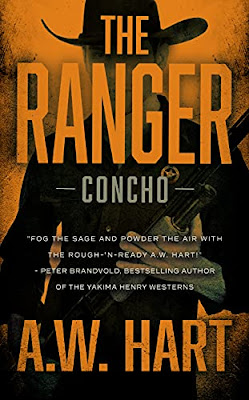
Concho #01 - The Ranger

According to Wikipedia, Charles Gramlich teaches psychology at Xavier University. Born in 1958, Gramlich grew up in the foothills of the Ozark Mountains. His first published novels were in the late 1990s, with his influences ranging from Edgar Rice Burroughs to Louis L'Amour. Gramlich has authored fantasy titles like Swords of Talera and Wings Over Telera. In addition to writing in genres like sci-fi, mystery, and romance, Gramlich used Wolfpack Publishing's house name A.W. Hart to author an ongoing modern western series called Concho. My first experience with the author and the series is the debut, The Ranger.

The series stars Concho Ten-Wolves, a 6'-4” former Army Ranger that now works the Rio Grande border as a Texas Ranger. His heritage is African-American and Kickapoo Native-American. He lives on the Kickapoo reservation and has an on again, off again relationship with a woman named Maria. His uncle Meskwaa is the stereotypical funny guy and there's also a rat snake named Maggie.

As the novel begins, Concho receives a call for law-enforcement assistance at the local shopping mall. Inside, members of a terrorist group called The Aryan Brotherhood have executed five people and taken numerous hostages. With no back-up force, Concho takes his two handguns, a 30-06 rifle and a bow and arrow into the mall to make the save. In an exciting battle, Concho kills a number of terrorists with random weapons and ultimately becomes the hero.

After a verbal beat-down, Concho is relieved of his duty for a week, but not suspended. But, he is retained by the local sheriff's office when two bodies are discovered. One of the men is the Chief of the Tribal Police and the other has a distant relationship with Concho. Through flashbacks, readers gain an introspective understanding of Concho's upbringing, his military service, and glimpses of a failed relationship with his biological father. These elements help define the character and make for an interesting “open-book” concept that should propel the series. 

Concho's investigation into the two deaths leads him into conflict with the reservation, the casino's criminal network, and ties to a Native-American gang called The Bloods. The murder mystery leads into some deadly territory where Concho finds himself a target. After surviving house fires, car accidents, and flying bullets, the Texas Ranger finds himself forced to solve the crime or literally die trying. 

The Ranger is laced with over-the-top, unbelievable action sequences that should cater to fans of 80s action films. You have to suspend your disbelief and just accept that this fictional hero can accomplish anything. His NFL linebacker frame adds credence to the fact that he can receive, and dish out, physical punishment. In some ways, the book reads like a Dirty Harry paperback by Leslie Alan Horvitz and Ric Meyers (house name Dane Hartman). The hero rides tall, shoots straight, and speaks the truth – a modern day cowboy trapped in the present. 

As a series opener, there's plenty of potential to make this character a little more dynamic or, even fragile. If you like contemporary westerns, then Concho may be your next read. 

Concho:

1. The Ranger
2. Hot, Blue, and Righteous
3. Path of Evil
4. Crescent City Blues

Monday, January 10, 2022

Heritage of Fear

NYU graduate Morris Hershman (b. 1926) authors gothic, romance and western titles under the pseudonyms Evelyn Bond, Arnold English, Sara Roffman, Janet Templeton, Sam Victor, Lionel Webb, and Jess Wilcox. He is a member of the Mystery Writers of America and his papers are stored at Bowling Green State University. My experience with the author is his 1960s and 1970s gothic paperbacks published by the likes of Belmont, Lancer, and Avon under the Evelyn Bond name. In the mood for a cozy mansion thriller, I tried Hershman's 1966 Belmont novel Heritage of Fear

Set in 1874, the book stars a young American woman named Karen who has recently married the wealthy British businessman Hugh Locke. On a train ride to Hugh's enormous Locke Hall home, Karen bumps into a man who has some knowledge about her new family. Hugh's father had been married twice before and experienced the death of his first wife when she was just a bride. The second wife nearly died in a horse riding accident before finally perishing giving birth to Hugh. This stranger provides an ominous warning. Demanding an explanation, Karen prods Hugh into revealing the origin of the warning. Hugh explains that Locke Hall is connected to ridiculous folklore that any bride brought to the home will die. 

Needless to say, Karen experiences some frightening things inside her new mansion. First, she is nearly killed when a large painting falls on her. Second, she is spooked by the “ghost” of a woman dressed in a wedding gown with her throat savagely sliced. After the wedded couple host both the family attorney and Karen's father, a murder occurs pitting everyone against each other. Is their a murderous ghost on a homicidal rampage or did one of these four people commit murder?

Hershman's narrative plays out like a suspenseful whodunit with an abstract locked room mystery. The idea of the gruesome ghost was scary at times, but at this point I'm a seasoned gothic pro and I know how these supernatural entities eventually morph into vengeful ex-lovers, greedy family members or jaded employees. I won't ruin the surprise because there is a small chance that this could be your first gothic read (out of the 2,500 unique titles that were probably published). Hershman is a capable writer that I enjoyed and I felt he made the most out of this tired storyline.

Friday, January 7, 2022

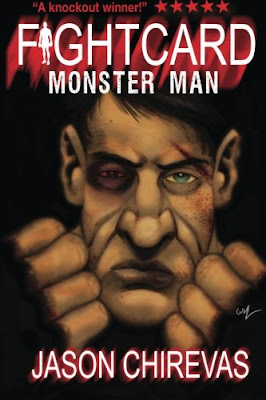
Monster Man

In 2011, authors Paul Bishop (Lie Catchers, Penalty Shot) and Mel Odom (The Executioner, Hellgate) each wrote and self-published a pulp-styled boxing novella. The books were so well received, a brand was created called Fight Card. Various authors would try their hand at crafting a 25,000-30,000 word novella centralized around boxing in the 1940s and 1950s. The ebooks were published under a house name of Jack Tunny with physical editions printed with the author's real name. The brand created spin-offs like Fight Card MMA, Fight Card Now, Fight Card Luchadors, and even Fight Card: Sherlock Holmes

My introduction to the Fight Card series is an installment called Monster Man. It was authored by Jason Chirevas and published in 2014. It has also been included in a three-book omnibus titled Under the Lights and Heat, a collection of three connected Fight Card novellas written by Chirevas. In 2019, Chirevas contributed a short story to Paul Bishop's collection Bandit Territory: Ten New Tales of Murder & Mayhem and he created and authored the western series Ames & Fyre

Monster Man, set in 1953, stars a talented young boxer named Ben Harman. He grew up an orphan in St. Vincent's home for boys in Chicago. After the Army, Ben found that he was a gifted and natural boxer. Rising in the ranks of the fight game, Ben meets an unlikely fate one night in Albuquerque, New Mexico. His powerful right hand fatally injures his opponent in the ring. The death leads to Ben's removal from the big-time fight game. 

The narrative then moves to Toronto and readers learn that Ben is now paired with his old friend Pete. Together, the two are running a fight scam from city to city. The gimmick is that Ben fights in amateur bouts and he either takes a dive (pretending to be knocked out so he loses) or he runs a hustle and fakes that he is brand new in the fight business, then proceeds to knock out the city's local champ. Either way, Pete makes the bets depending on the scam, and the two pocket the money evenly. The catch is that they can't be seen together and they have to conduct business east of New Mexico so no one will recognize Ben as a former pro. But, where does “Monster Man” fit in?

Ben is suffering from the early onslaught of acromegaly, a disease in which an individual's hands, feet, forehead, nose, and jaw grow disproportionately due to an increased hormone growth. You may remember WWE Hall of Fame legend Andre the Giant as the most famous human to have acromegaly. But, there was also 1933 world heavyweight boxing champion Primo Carnera, which influenced the author's decision to write the main character in this way. Throughout the story, Ben researches the disease in all of the town libraries he visits. He also reads up on Carnera's condition. Ultimately, Ben begins to suffer severe pain in his wrists and hands and he fully understands what his future entails.

Monster Man absolutely shines like a classic mid-century crime-noir, fitting in the most rudimentary staples that the genre possesses – gambling, criminals, romance, money and an examination of the average human condition. Like Clark Howard's masterful 1967 crime-fiction novel The Arm, Monster Man emphasizes the gambling addiction – bad, worse, and worst – but introduces a love interest that steadily begins to chip away at the criminality factor. The “monster” isn't Ben, it's the game. In a clever twist, Ben falls for a prostitute named Vicky, a once beautiful, aspiring actress that now has a physical flaw. Ben and Vicky share the same imperfections, and they are both caught up in a life of crime. 

I read a lot of fiction, from the greats to the aspiring authors that still have some rows to ho. In my experience as a reader, Jason Chirevas proves that he is truly something special. He has a unique talent to convey so much emotion and drama in his wording. I felt invested in the characters and sympathized with their predicament. There's no easy way out, and Chirevas' doesn't short-change anything. 

Monster Man is gritty, entertaining, and wildly unpredictable. It caters to boxing fans, crime-fiction readers, and anyone that just loves an engrossing story. While I hung on to the ending for dear life, I'm relieved to know that Ben and Vicky's story continues in the 2015 follow-up Job Girl. Look for my review of that in the coming days. 

You can buy Monster Man as a Kindle stand-alone ebook HERE or the omnibus Under the Lights and Heat as digital or physical HERE.