Monday, January 10, 2022

Heritage of Fear

NYU graduate Morris Hershman (b. 1926) authors gothic, romance and western titles under the pseudonyms Evelyn Bond, Arnold English, Sara Roffman, Janet Templeton, Sam Victor, Lionel Webb, and Jess Wilcox. He is a member of the Mystery Writers of America and his papers are stored at Bowling Green State University. My experience with the author is his 1960s and 1970s gothic paperbacks published by the likes of Belmont, Lancer, and Avon under the Evelyn Bond name. In the mood for a cozy mansion thriller, I tried Hershman's 1966 Belmont novel Heritage of Fear

Set in 1874, the book stars a young American woman named Karen who has recently married the wealthy British businessman Hugh Locke. On a train ride to Hugh's enormous Locke Hall home, Karen bumps into a man who has some knowledge about her new family. Hugh's father had been married twice before and experienced the death of his first wife when she was just a bride. The second wife nearly died in a horse riding accident before finally perishing giving birth to Hugh. This stranger provides an ominous warning. Demanding an explanation, Karen prods Hugh into revealing the origin of the warning. Hugh explains that Locke Hall is connected to ridiculous folklore that any bride brought to the home will die. 

Needless to say, Karen experiences some frightening things inside her new mansion. First, she is nearly killed when a large painting falls on her. Second, she is spooked by the “ghost” of a woman dressed in a wedding gown with her throat savagely sliced. After the wedded couple host both the family attorney and Karen's father, a murder occurs pitting everyone against each other. Is their a murderous ghost on a homicidal rampage or did one of these four people commit murder?

Hershman's narrative plays out like a suspenseful whodunit with an abstract locked room mystery. The idea of the gruesome ghost was scary at times, but at this point I'm a seasoned gothic pro and I know how these supernatural entities eventually morph into vengeful ex-lovers, greedy family members or jaded employees. I won't ruin the surprise because there is a small chance that this could be your first gothic read (out of the 2,500 unique titles that were probably published). Hershman is a capable writer that I enjoyed and I felt he made the most out of this tired storyline.

Friday, January 7, 2022

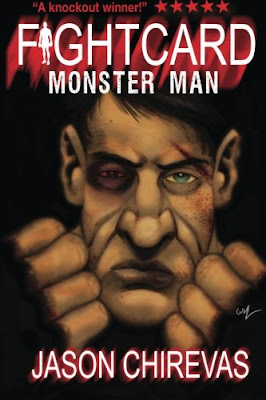
Monster Man

In 2011, authors Paul Bishop (Lie Catchers, Penalty Shot) and Mel Odom (The Executioner, Hellgate) each wrote and self-published a pulp-styled boxing novella. The books were so well received, a brand was created called Fight Card. Various authors would try their hand at crafting a 25,000-30,000 word novella centralized around boxing in the 1940s and 1950s. The ebooks were published under a house name of Jack Tunny with physical editions printed with the author's real name. The brand created spin-offs like Fight Card MMA, Fight Card Now, Fight Card Luchadors, and even Fight Card: Sherlock Holmes

My introduction to the Fight Card series is an installment called Monster Man. It was authored by Jason Chirevas and published in 2014. It has also been included in a three-book omnibus titled Under the Lights and Heat, a collection of three connected Fight Card novellas written by Chirevas. In 2019, Chirevas contributed a short story to Paul Bishop's collection Bandit Territory: Ten New Tales of Murder & Mayhem and he created and authored the western series Ames & Fyre

Monster Man, set in 1953, stars a talented young boxer named Ben Harman. He grew up an orphan in St. Vincent's home for boys in Chicago. After the Army, Ben found that he was a gifted and natural boxer. Rising in the ranks of the fight game, Ben meets an unlikely fate one night in Albuquerque, New Mexico. His powerful right hand fatally injures his opponent in the ring. The death leads to Ben's removal from the big-time fight game. 

The narrative then moves to Toronto and readers learn that Ben is now paired with his old friend Pete. Together, the two are running a fight scam from city to city. The gimmick is that Ben fights in amateur bouts and he either takes a dive (pretending to be knocked out so he loses) or he runs a hustle and fakes that he is brand new in the fight business, then proceeds to knock out the city's local champ. Either way, Pete makes the bets depending on the scam, and the two pocket the money evenly. The catch is that they can't be seen together and they have to conduct business east of New Mexico so no one will recognize Ben as a former pro. But, where does “Monster Man” fit in?

Ben is suffering from the early onslaught of acromegaly, a disease in which an individual's hands, feet, forehead, nose, and jaw grow disproportionately due to an increased hormone growth. You may remember WWE Hall of Fame legend Andre the Giant as the most famous human to have acromegaly. But, there was also 1933 world heavyweight boxing champion Primo Carnera, which influenced the author's decision to write the main character in this way. Throughout the story, Ben researches the disease in all of the town libraries he visits. He also reads up on Carnera's condition. Ultimately, Ben begins to suffer severe pain in his wrists and hands and he fully understands what his future entails.

Monster Man absolutely shines like a classic mid-century crime-noir, fitting in the most rudimentary staples that the genre possesses – gambling, criminals, romance, money and an examination of the average human condition. Like Clark Howard's masterful 1967 crime-fiction novel The Arm, Monster Man emphasizes the gambling addiction – bad, worse, and worst – but introduces a love interest that steadily begins to chip away at the criminality factor. The “monster” isn't Ben, it's the game. In a clever twist, Ben falls for a prostitute named Vicky, a once beautiful, aspiring actress that now has a physical flaw. Ben and Vicky share the same imperfections, and they are both caught up in a life of crime. 

I read a lot of fiction, from the greats to the aspiring authors that still have some rows to ho. In my experience as a reader, Jason Chirevas proves that he is truly something special. He has a unique talent to convey so much emotion and drama in his wording. I felt invested in the characters and sympathized with their predicament. There's no easy way out, and Chirevas' doesn't short-change anything. 

Monster Man is gritty, entertaining, and wildly unpredictable. It caters to boxing fans, crime-fiction readers, and anyone that just loves an engrossing story. While I hung on to the ending for dear life, I'm relieved to know that Ben and Vicky's story continues in the 2015 follow-up Job Girl. Look for my review of that in the coming days. 

You can buy Monster Man as a Kindle stand-alone ebook HERE or the omnibus Under the Lights and Heat as digital or physical HERE.

Thursday, January 6, 2022

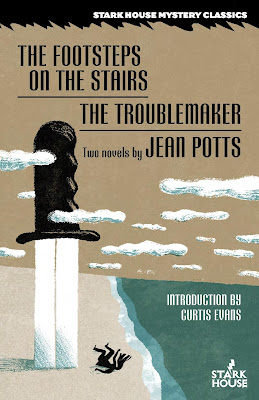
The Troublemaker

Author Jean Potts (1910-1999) graduated from Nebraska Wesleyan University in 1936. By 1940, Jean had moved to New York City, where she resided the rest of her life. With her newspaper experience in writing and editing, Potts eventually began contributing short stories to mainstream magazines like Woman's Day and Collier's. Her first book, Someone to Remember, was published in 1943, the first of 15 original mystery and crime-fiction novels. Along with winning a prestigious Edgar Award in 1954, Potts contributed to high-profile mystery magazines like Ellery Queen and Alfred Hitchcock. Beginning in 2019, Stark House Press began reprinting many of Potts novels in two-in-one volumes under their Stark House Mystery Classics imprint. My first experience with the author is her 1972 mystery novel The Troublemaker. It has been collected along with her 1966 novel Footsteps on the Stairs as the newest reprint by Stark House.  

Quentin Leonard, finding himself unemployed, explains to his wife Grace that he needs to get away for a little while and spend some time finding himself in the northeast. After deceptively packing for a mini-vacation to New Hampshire, Quentin picks up his lover Lisa and the two of them head to the coastline of Maine. After their car breaks down, they agree to work for the Seaview Inn, a cozy little retreat for tourists wanting to explore the rocky shoreline. 

The two lovers quickly realize there is no real plan other than working the summer away in this picturesque little town. Complicating matters is that Quentin finds a handwritten letter addressed to Lisa from her former lover, a mentally unhinged man named Carlos. Quentin knows Carlos has found them, but he isn't sure if Lisa is more willing to love an older, married man like himself or a former suicide patient in Carlos. It seems that both paths will eventually lead Lisa to future heartache and ruin. But, she never makes it that far. Her dead body is found the next morning on the rocks. 

Potts places numerous characters at the proverbial crossroads. Who has tipped the scale to plunge into this jealous, homicidal rage? The obligatory suspects are Quentin, Carlos, and Grace, a trio of scorned lovers that all have motives for killing off sexy Lisa. What's really odd is that Potts injects some additional characters to create a denser narrative. Carlos' mother arrives in town prior to the murder and there is a guest named Margaret that just happens to have a broken car around the same time period as the murder. There's also the innkeepers themselves. But, the most surprising protagonist is a bird watching boy sleuth named Emerson. Aligning with Quentin, this young amateur detective is determined to find the killer.

The writing in The Troublemaker is propulsive enough to keep the pages flipping fairly quickly. It's a short read and contains enough mounting evidence to keep readers interested. I'm just not sure if this 1972 mystery novel is totally that original. If you are familiar enough with suspense thrillers, or Lifetime movies, the narrative is simply connecting the dots. The grand reveal comes within the last few paragraphs, but it's a sudden conclusion. I wanted a little backstory on the murder and what prompted such erratic behavior. But, overall, I'm not disappointed. It was an entertaining read.

If you enjoy the classic, traditional murder mystery, then surely you will be pleased with Jean Pott's The Troublemaker. Get the book HERE

Wednesday, January 5, 2022

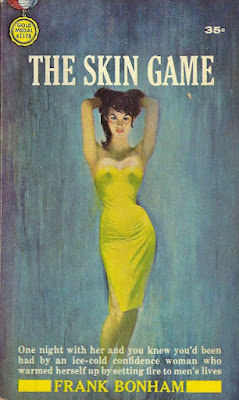
The Skin Game

Frank Bonham (1914-1988) is best remembered as an author of young adult fiction and westerns from the pulp era into the advent of paperback originals. However, he also authored three crime novels, including The Skin Game, originally released by the prestigious Fawcett Gold Medal imprint in 1962.

Our main character is a former cop turned Parole Officer named Sam Garrett. He’s provided the task of supervising a parolee named Gene Foreman, a man Sam knew years ago when they were both police officers. Gene is technically a sex offender who was recently released on parole from prison after serving 26 months. It’s not as bad as it sounds. He was consorting with a girl who said she was 19 but was actually 17 and - boom - he’s automatically a statutory rapist.

A cop named Donovan has a real hard-on for Gene and wants to bring him in as a suspect for a recent sex crime. Sam doesn’t think Gene did it, but is duty bound to bring his old friend in for police questioning. The problem? Gene abandoned his apartment and is nowhere to be found. Parole Officer Sam needs to locate his old friend before he violates the terms of his parole and further cements his status as a suspect in Donovan’s investigation.

The stakes escalate exponentially when the police learn of a sexual thrill-killer who gets women to pose for naked photographs before brutally murdering them. With Gene completely off the grid, the police naturally gravitates to him as a suspect. Is it possible that this ex-cop has a screw loose and is indiscriminately killing sexy babes while on parole? That’s one of the mysteries encapsulated in this 160-page paperback. There are some unexpected twists along the way, and the novel isn’t always about what it seems.

For a guy who only dabbled in the Fawcett Gold Medal style of crime noir fiction, Bonham nailed the style and plot structure very well. There was plenty of sexual titillation, and characters who aren’t what you think they are. The Skin Game has been reprinted by Cutting Edge, which is a good thing considering it’s a solid example of what made mid-20th century paperbacks something really special. Get the book HERE

Tuesday, January 4, 2022

The Whisper Man

Steve Mosby is a British author that specializes in crime-fiction and psychological suspense. He's often compared to Scandinavian writer Jo Nesbo with his emphasis on grisly serial killers and rapists. Since 2003, Mosby has authored 11 stand-alone novels, but in 2019 he also began using the pseudonym Alex North. After seeing the North name in retail stores like Target, I finally decided to read The Whisper Man. It was published in 2019 by Penguin and exists in physical, digital, and audio formats. 

What's interesting about The Whisper Man is that it blends first and third-person perspectives into the narrative. Further, it focuses on two murders that happen 20 years apart. These elements expand the storyline and allow for some interesting ideas and plot twists. It isn't a standard crime-thriller because Mosby uses the Alex North pseudonym to purposefully add a supernatural aspect to his stories. 

20 years ago, the British village of Featherbank was terrorized by a child killer deemed “The Whisper Man.” The killer, Frank Carter, gained infamy by whispering to children at their bedroom windows. Eventually, a homicide detective named Pete cracked the case, sending Carter to prison for life and all of the bodies recovered except one. Over two decades, Pete has tried to find the body to no avail. He frequently visits Carter in prison in a cat and mouse chess match to learn where the body is. Carter's superiority as the prison's pseudo-leader gives him an arrogance that Pete can't break. Thus, two decades of mental battles have left Pete semi-retired, divorced and recovering from alcoholism. 

Now, a homicide detective named Amanda has been handed a new case that has the characteristics of the Whisper Man murders. A young boy was killed and dumped near a rock quarry in Featherbank. In questioning his parents, Amanda learns that the boy told his mother that he heard whispers outside of his window the week before. In looking into Carter's case, Amanda asks Pete to join the investigation as a consultant based on his experience with the killings. 

While this is happening, a recent widow named Tom moves to Featherbank with his young son Jake. After settling into the new house, Tom starts to notice that Jake is having conversations with an imaginary friend. From Jake's perspective, readers learn that this imaginary friend is a young girl who may have ties to the house and its original owners. Things get creepy when Jake tells Tom about “the boy in the floor.” When Tom hears strange whispers in the house, he begins to suspect that someone is after his son.

Obviously, there's a lot going on in The Whisper Man. The book's opening act explains the current mystery and the murders from 20 years ago, so I felt fully invested in how these were connected. Tom's backstory with the emotional death of his wife and his insecurity in raising Jake as a single dad was really effective. When Pete is introduced, readers gain perspective from his vantage point as well. I wanted to learn more about Amanda, but North quickly shifted her to a supporting character. 

As a horror novel, the author succeeds in creating some extremely unsettling scenes. The whispers in the house, Jake's “imaginary friend”, the boy in the floor mystery as well as the whole idea of a serial killer preying on children from their window were truly terrifying. As a crime-thriller, in the vein of James Patterson, it's mostly just a pedestrian by-the-books investigation – interview the families, look into the past homicides, interview key characters in prison, and introduce flawed characters looking to redeem themselves. It's nothing you can't find on any prime-time network television show. But, it works well when combined with the concept of something supernatural taking place.

Based on my reactions to this book, I plan on reading more of Steve Mosby's stand-alone thrillers as well as his other Alex North novel, The Shadows (2020). He's a good storyteller and at the end of the day, that's really what we are looking for. 

Buy the book HERE.

Monday, January 3, 2022

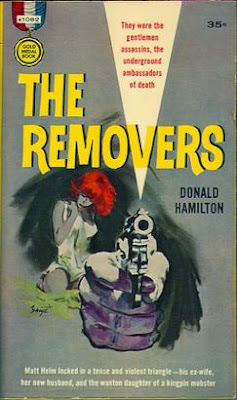
Matt Helm #03 - The Removers

Ian Fleming's mega-star James Bond influenced a number of spy fiction titles, including Assignment and Nick Carter: Killmaster. One of the most popular is the Matt Helm series authored by Donald Hamilton. It ran from 1960-1993 with 27 total books. I was lukewarm on the series first two installments, but the character still intrigued me enough to warrant further pursuit. I grabbed a copy of The Removers, the third installment of the Matt Helm series. It was originally published by Fawcett Gold Medal in 1961 and remains readily available today in audio, digital and physical reprints.

In Death of a Citizen, the series debut, Helm is married to a woman named Beth and has three children. He's a former OSS agent (the early CIA) that established a writing career and a sense of normalcy after retirement. But, events drag him back into the spy business and he rejoins his former department. I didn't particularly like the book, despite its enormous popularity, and felt that it was incomplete. The idea that Helm simply left his wife and kids (and has an affair nonetheless) didn't sit well with me. Thankfully, The Removers circles back to his family and completes the origin tale in its entirety.

The Removers begins by explaining that Beth Helm is now remarried and lives on a cattle ranch in Reno, Nevada with her kids. She's now Mrs. Lawrence and her husband is a British chap that has a shadowy past. Helm receives a letter from Beth asking him for a favor. Thus, the opening chapter has Helm in Reno preparing for an uncomfortable meeting with his ex-wife. However, Helm also receives word from his boss Mac that a young agent is working an assignment in Reno and may need a light assist. 

Helm learns from Beth that her husband was involved in a prior business similar to Helm's. Because of some sort of past event, shady people are threatening the family. Helm takes it all with a grain of salt until he meets Beth's husband Logan. Helm's theory is that Logan isn't really British, but is legitimately some sort of skilled professional capable of defending Helm's kids and ex-wife. In fact, Logan politely, but sternly, advises Helm to leave the ranch and never look back. 

The star of the show is Moira, a young and sexy woman that physically distracts Helm. The two get it on, and in doing so Helm learns that Moira is the daughter of Big Sal Fredericks, a Reno mobster. Fredericks is employing a foreign spy/enforcer named Martell, a man that Mac warns Helm about. After learning that Logan Lawrence is a former gun for Fredericks, Helm begins to connect the dots. Logan left the business, but Fredericks needs him for one more run to Mexico to recapture stolen heroin. Logan refuses, thus the not-so-gentle rub.

All of this ties in beautifully and creates a really engaging story. Helm engages in some awesome dialogue, never comically witty, but maintaining a hard-edged coolness. The action scenes are fairly swift and keep the narrative flowing into a much longer finale that is soaked with violence. Oddly, it was told with a sense of western traditionalism. The hero rides to the rural cabin in the woods to fight the unruly bad guys that have raped and captured his woman. But, that hero isn't really Helm. 

In a clever way, Hamilton mirrors Helm's origin story by telling a similar tale with Logan Lawrence. In this case, Lawrence is the one married to Beth and is called back into action after violent events begin to intrude into his retirement. Arguably, Logan is the real hero.

My main beef with Matt Helm is that he personifies the hardened tough guy. He talks tough, his first-person perspective is menacing, and he genuinely has old war stories or missions that he shares to validate his callous command. But, he never actually does much fighting. In the first two books, Helm doesn't really get the job done and people unexpectedly die. In this book, Helm watches Moira get abused by two women until her own dog makes the save and kills the would-be-rapists. Helm is knocked in the head outside of his motel room and then captured by Martell and Fredericks. 

In the finale, Logan is shot in the leg and placed on the sofa. Helm is tied up and has to listen to his ex-wife being raped in the next room. He has the audacity to question why one-legged, bleeding Logan isn't doing anything about it. The book's rowdy conclusion has Logan saving Helm's life. But, for whatever reason it all just works and Hamilton's prose is so damn cool. I loved the timeline and pacing, the brilliant conclusion of Moira (the obligatory spoiled sex kitten), Beth's neediness, the escalated violence, and Logan's expertise in disposing of the bad guys. Helm should have been the hero (and maybe he is somehow?), but I can settle for him as a co-partner.

I've already started the fourth volume, The Silencers. In the opening chapters, Helm is sent on a mission to Mexico to save a female agent. Wouldn't you know it...she's stabbed to death in front of him. But, it's written so well that I don't even care how inept the hero is. I'm sure an alternate hero will rise to the occasion. Buy a copy of the book HERE

Friday, December 31, 2021

Rambo: First Blood Part II

In 2016, Gauntlet Press, in collaboration with Borderlands Press, re-printed David Morrell's novelization of Rambo: First Blood Part II. What's interesting about the reprint is the author's lengthy, detailed explanation of how he became involved in the project. I highly recommend reading, or listening to the audio book edition, if you love books. You don't need to be a Rambo enthusiast or fan. It's a spellbinding commentary if you love the films as much as I do, but for a casual reading fan Morrell's involvement and writing experiences about creating a novelization of the script was just so captivating. 

Morrell authored First Blood in 1972, the book from which the 1982 blockbuster film was derived from. That book is much different than the film, as I explained in my review. Mostly, Rambo is a more arrogant, cocky kid in the novel and at the end of the book ***spoiler alert*** Rambo dies. In the film, he doesn't. 

In the author's introduction of Rambo: First Blood Part II, Morrell explains that he had no idea a film sequel was in development until he read it in the newspaper (authors seem to be the last to know). Shortly after, the film's development team, Tri-Star Pictures, contacted Morrell about writing the novelization of the film. Back then, films were seen at the cinema or on network television. Streaming didn't exist and VHS/laser disc wasn't mainstream (or affordable). Novelizations became important because they presented that middle ground between theatrical release and the “Sunday Movie of the Week.” The average consumer may have missed the theatrical release, so reading a novelization was an appealing alternative.

Morrell politely turned the project down because he was already writing a novel, 1984's Brotherhood of the Rose, and his version of the character ***spoiler alert *** died. But, Tri-Star kept encouraging Morrell to get out in front of the film because it was going to be BIG. Tri-Star had no other option than Morrell simply because contractually no one else at the time could write a Rambo related novel.

Needless to say, Morrell became involved (a decision that included a conversation with his friend Max Allan Collins), but was only presented a VHS tape with one scene from the film. Finding it impossible to write a novel based on a film he's never seen, Tri-Star provided Morrell a rough draft of the script written by both Sylvester Stallone and James Cameron (Terminator). That draft is what Morrell used to write the novelization. However, that draft was heavily modified by Stallone due to creative differences with Cameron. Thus, Morrell's book is an alternate version, one that I had never seen before. As a fan of the franchise, reading this book seemed mandatory.

In the novel, John Rambo is in a prison labor camp breaking rock by day and huddling in the dark shadows of his cell at night. His former Commander, Col. Sam Trautman, pays Rambo a visit to offer him a deal. The U.S. government has authorized a mission into Vietnam to take photos of a prison camp reportedly containing American P.O.W.s. With the Vietnam War over, the public had become infatuated with the idea that these P.O.W.s were still alive and being held as political collateral. The unit running this solo mission is a contracting company led by a guy named Murdock. 

Rambo later learns that this Vietnamese prison camp is the same one he was held at. This was the home of pain, a horrific place where Rambo was tortured. Because he was able to escape, the contracting company feels that Rambo is the best operative for the job. He knows the area, the camp layout, and other important details. Soon, Rambo is piloting a chopper into Thailand to meet up with Murdock and Trautman. He's provided a sophisticated portable satellite and a camera (ancient tech today), but Rambo wants weapons and the chance to break the prisoners free. This is strictly forbidden, and Murdock explains that the photos will be used to authorize a clandestine Delta Force unit to retrieve the prisoners.

Mostly all of this follows the final film version, but once Rambo enters Vietnam, it changes. After surviving a parachute fiasco, Rambo enters the thick jungle to meet up with an undercover Vietnamese ally named Co. Together, the two of them negotiate a boat ride up river to gain an access point to the camp. The romantic spark between Rambo and Co isn't the same as the film. Co does ask Rambo to take her back to the U.S., but it isn't based on a romantic interest. 

Once Rambo and Co have a vantage point to the camp, Rambo advises Co that the camera was lost and that the new deal is to rescue a prisoner found tied to a cross. It's here that Morrell absolutely shines. The author provides a brief history on archery, how the weapon has evolved over the centuries and why Rambo prefers the weapon over a more capable tool like an M-16 or AK-47. I found this so intriguing and Morrell's detailed explanation of the importance of archery, and Zen, helped define the hero even more. There's also some history on Rambo's upbringing, his abusive father, and Native American heritage. Again, these are book details that really made Rambo a more dynamic character as opposed to film.

When Rambo is captured by the Vietnamese, there's a brief backstory on a torturer named Tey, the same soldier that tormented him years ago. Obviously, the two have a heated rivalry, but the main antagonist is a Soviet interrogator named Podovsky. The torture sequences are mostly parallel to the movie - slime pit, leeches, and electric shock. The book's finale is similar to the film, but Co's importance and the dealings with a double-dealing pirate captain are modified. The film's intensity, rugged action sequences, and overall violence transcend to the printed page in the same fashion. Morrell brilliantly conveys the movie's emotion and exhilaration. 

If you love the film or if you're just a casual fan, David Morrell's novelization is a thrilling action-adventure experience. In my opinion, it really just exists on its own. Details regarding the movie or franchise aren't important in the grand scheme of things. Rambo: First Blood Part II is just an awesome story and a pleasurable reading experience. If nothing else, I highly recommend reading the author's introduction. It's an introspective revealing of what goes into creating a novelization and a must read for anyone interested in the concept.

Buy a copy of this book HERE.