Thursday, September 8, 2022

Joe Broderick's Woman

In the 1970s, Hollywood became fascinated with the large transport truck, aka “big rig”, “18-wheeler”, “tractor-trailer” or simply “Mack”. Films like Smokey and the Bandit (1977), White Line Fever (1975), Breaker! Breaker! (1977), and Convoy (1978) captured the heart and soul of the blue-collar truck-driving man, albeit with plenty of zany, over-the-top action hijinks that elevated the profession into a type of comic book heroism. The genre swerved into the men's action-adventure lane on occasion, prompting series titles like William W. Johnstone's Rig Warrior (1987) and Bob Ham's Overload (1989). 

Manor Books published an action-adventure-trucker novel titled Joe Broderick's Woman. It was released in 1978 and was authored by a possible “one 'n done” author named John H. Arbor. My internet search produced no other results for the author. Based on the quality of the book, I was hoping Arbor had written more. 

Joe Broderick is the owner and operator of a trucking company in Baltimore called Broderick Lines. Joe is former military and now lives a peaceful and successful life delivering the goods to a hard-earned book of business. In the novel's opening pages, readers gain a glimpse of the trucker lifestyle as more of a business with a secretary, driving crew, and various clients adding shipments to schedules. Not exactly Lincoln Hawk stuff (Over the Top, 1987).

Unbeknownst to him, Joe is married to a mobster's former mistress, a nice woman named Aletha. The two met a few years ago after Aletha successfully escaped the clutches of Sartorius Roth, a New Jersey kingpin. Aletha created a new life for herself, but warned Joe that she has a shady past and that someday her past may catch up to her. Now, pregnant, domesticated, and totally in love, Aletha is finally found by Roth's hired hands. While Joe is at work, the goons break into his house and capture Aletha. 

Arbor's narrative is a three-way presentation consisting of the inner workings of Roth's empire and his right-hand man attempting to unseat him. This presentation also includes Roth's reunion with Aletha and the sentence he serves her. There's some graphic violence and rape as Aletha is thrown to the wolves as a sex servant for Roth's men, ultimately losing her sanity in the torture and abuse. The second presentation is that of Roth's current mistress, a woman named Rosalyn. She is skeptical of Roth reuniting with Aletha and wants to keep her position of power. The third storyline is Joe's hunt for Roth and his plans to rescue Aletha.

As a B-grade action novel, Joe Broderick's Woman wins on all levels. It has a great storyline that isn't far removed from the typical vigilante stories we all love – The Executioner, The Revenger, etc. It's brutal when it needs to be, emotional at the right times, and hard-hitting as a Mack truck when the bullets start to fly. I really liked Joe's character and his progressive relationship with a former mob girl named Darla as well as his team-up with a former military veteran named Hap. The vengeance angle never seemed forced to me, which is a testament to Arbor's patient writing style. It all comes to fruition in due time. 

Whether John H. Arbor is a real guy or not remains to be seen. His style is reminiscent of Jon Messmann, but I don't believe Arbor was a pseudonym he used. With Manor publications, unmasking the identity of authors and artists is like trying to locate an honest representative in Congress. We may never find the answer. But don't let the mystery keep you from enjoying Joe Broderick's Woman. It's an entertaining 1970s beat 'em up that crosses lanes with trucker pop-culture. Recommended. 

Buy a copy of this book HERE

Wednesday, September 7, 2022

The Hunting Shack

James Dickey's 1970 outdoor-survival novel Deliverance was adapted into a film by the same name in 1972. Both were widely successful and prompted numerous imitations. In the publishing world, it was books like Hunter's Blood (1977), Shoot (1973), Deer Hunt (1976), and Wilderness (1979) that carried out the suspenseful cat-and-mouse chase through the wilds of North America. These books typically challenged the American male, average or otherwise, with extreme, barbaric situations in the wilderness. There were a lot of 1970s books with this same premise, and I always try to pick them up when I spot one in the wild. Thankfully, I stumbled on The Hunting Shack, a 1979 paperback published by Dell authored by Gunnard Landers.

The book is set in the rural, icy landscape of a Wisconsin winter. Six average men venture into the wilderness for an annual, weeklong hunting trip. They have a small shack they utilize as lodging, and there's a rivalry between the men on who can land the biggest buck and drink the most alcohol. Midweek, the guys head to the closest town and bed down prostitutes as a way to escape the boring nine-to-five suburbia Hell. But, one of these six men does a little something different every few years.

Throughout the book's 220 pages, readers are thrust into the mind of Glenn, a dentist that joins his five friends each year for the hunting trip. But, Glenn journeys out on his own, away from the other hunters, and routinely kills another hunter. The narrative mentions two hunters being killed in the area in the past, and, as the book begins, Glenn is targeting another hunter. This time, his prey is one of his friends, an experienced hunter named Norm. 

Author Gunnard Landers often used harsh, rural landscapes as a backdrop for his novels. Landers, a Wisconsin native, rancher and Vietnam War veteran, authored a series of books starring an undercover game warden named Reed Erickson. These books take place in places like Minnesota and Alaska. With Landers' skills as a storyteller richly embedded in this sort of sportsman escapism, The Hunting Shack excels in a lot of different ways. 

The novel serves the survival-horror genre with its psychotic portrait of a deranged killer. The concept of a murderer among friends, collectively facing a rugged forest and snowy blizzard, was really entertaining. As a character study, the book centers on Glenn and Norm, two men who are both tiring of their tameness and bridled lifestyle. But, the book is also a wild and crazy look at a lot of stereotypical horny men just simply breaking rank and having a good time. There is a copious amount of sex and drinking, often graphic, as well as some of the typical juvenile banter between middle-aged hunting buddies. There is also a focus on two young prostitutes prospering with their good fortunes over the course of one sweaty, hot evening at the shack. 

The end result is that The Hunting Shack was a pleasurable reading experience that provided plenty of escapism, and presented some fun, although disgusting, beer-belching deer slayers. The book's finale was worth the price of admission and, overall, certainly possesses a Deliverance vibe. Highly recommended. 

Buy a copy of this book HERE

Tuesday, September 6, 2022

Killinger #01 - Killinger (aka The Turquoise-Yellow Case)

I read something online the other day that said Hell will be attempting to insert a USB into your computer for eternity. The catch is that no matter which side you place up, it will never properly fit. While that form of Hell would certainly warrant good behavior for a lifetime, I have a different version of Hell. It would require the condemned party to be placed on a small deserted island for eternity with an indestructible copy of Keith Parnell's paperback novel, and Hall of Shame inductee, Killinger

The front-cover blurb of the 1980 Pinnacle version, placed cleverly beside a rifle-toting, fit-as-a-fiddle Steve Holland, says this about Killinger:

“He likes his wine good, his women bad, and his enemies dead.”

What it fails to mention is that the book is nearly 250 pages in length and that anyone subjecting themselves to one page of this nonsense will suffer unimaginable horrors. This is Roadblaster bad, which is the epitome of bad literature. Whether it slides into the fiction-abomination, smelly cesspool as that novel is in the eye of the beholder, or nose of the sniffer. 

Jedediah Killinger III is retired and lives on a large yacht called Sybaris, docked in uneventful Santa Barbara, California. The boat has a secretary, a Japanese houseboy, 13 flavors of ice-cream, wood carvings of sexual positions, and lots of wine and fresh fish. In his spare time, he works as a maritime insurance investigator. Which brings him into an assignment to look into a shipping junk called Katja that was damaged at sea. Conveniently, the damaged vessel is docked near his own boat.

Killinger's investigation is basically just trying to bed down the daughter of the vessel's owner. He never leaves the dock area, has no actual purpose in the book, and just stands by eating, drinking, and partaking in intercourse with various characters. But, there's a heavy wooden crate on the damaged vessel and two people desire the crate. 

The plot is so dull and boring that it pains me to even outline it here. Two criminals, K.Y. Smith and Count Vaclav Risponyl, both want the crate. But, they feel like they must steal the crate. Think of the old roadrunner and coyote cartoon. There's elaborate attempts to steal the crate, which requires a giant crane, that end in disaster. These attempts are unintentionally comical, convoluted, and completely uninspiring. It's like how a great action installment, like Executioner or M.I.A. Hunter, would have a plot like this for about a half-page just to further the actual plot. Unfortunately, Parnell uses this simple plot for a full 250 page novel. 

Killinger should be avoided at all costs. It's tough, because Pinnacle released two versions, one in 1974 with a different cover and title as The Turquoise-Yellow Case, obviously cashing in on John D. MacDonald's nautical private-eye series Travis McGee and its color-coded naming convention. The 1980 version is simply Killinger. To add lemon juice to the wound, there is a second Killinger novel called The Rainbow-Seagreen Case. Essentially, three opportunities for you to have a Hellish reading experience. Stay alert in the book stores for this literary danger. Handle with care. See something, say something. 

Buy a copy of this book HERE 

Monday, September 5, 2022

Snapshot, 1988

I can remember a time, long ago, when you had to mention that author Joe Hill was Stephen King's son. No one knew who the Hell Joe Hill was. But, times have certainly changed, progressions made, and, despite that I just wrote about the King connection, it is no longer necessary. Joe Hill is a household name. He's created his own successful bibliography, his own creations – his own empire. 

Hill's novel NOS4A2 (2013) was a hit, prompting AMC to create a television series based on it. The same could be said for his novel Horns (2010), which was adapted into a film starring Harry Potter (or Daniel Radcliffe if you must). At the time of this writing, Black Phone has just disconnected from theaters, a film based on Hill's eponymous 2004 short-story. Hill excels in the graphic novel format as well, with popular series titles like Locke & Key (2008-2013), which was adapted into a series by Netflix, and Basketful of Heads, the first in a new DC imprint called Hill House Comics, shepherded by the author.

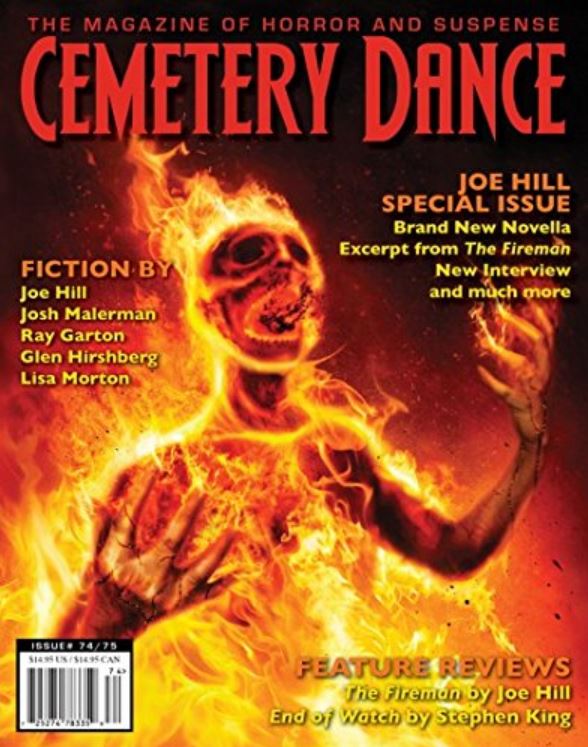
After reading Hill's novels Heart-Shaped Box (2007), NOS4A2 (2013), The Fireman (2016), and short-story collection 20th Century Ghosts (2005), I've developed a fondness for the author's writing style. After recently watching Black Phone, I went all-in on Joe Hill. I'm watching Locke and Key, downloaded a few of his comics, and just read the novella Snapshot, 1988, the subject of this review. It was originally published by the literary magazine Cemetery Dance, October 2016. It was later published as Snapshot in the collection Strange Weather (2017), along with three other novellas written by Hill. In 2016, Universal purchased the rights to the story for a future film release. 

The story is told in present day, first-person narrative by Mike Figleone. He's recounting for the reader the events that happened to him at the age of 13, way back in 1988. Michael is like the nerdy kid from Cloudy with a Chance of Meatballs. He's a complete whiz-kid, a future Silicon Valley heavyweight. His mother is a bestselling author that ran away to Africa, leaving just Mike and his Dad to fend for themselves.

One day, Mike escorts his senile senior neighbor Shelly back to her house. She complains to him that she's been plagued by a “Polaroid Man”. Of course, Shelly's husband, and Mike, know this statement is just connected to her dementia. But, Mike runs into the Polaroid Man at a gas station the same day. Through a wild series of events, Mike finds a man that can take your picture with a special kind of camera. But, each photograph taken erases parts of your memory. Maybe Shelly's on to something with this whole Polaroid Man paranoia. 

Snapshot, 1988 is a gem. It blends horror, fantasy and science-fiction into the perfect cocktail. The message on dementia and growing old wasn't lost, and, while not being preachy, reminds us of the true terror of big-tech and of future things to come. Mike is easily lovable and offers up some funny, candid commentary that's just right on the nose. It's easy to overdose on 80s nostalgia with so many movies, reboots and throwbacks saturating pop-culture. Thankfully, Hill doesn't overdo the era and offers just enough to keep the story from being indulgent. 

I would be remiss if I didn't mention that Snapshot, 1988 also features cameo appearances from Hill's other work, most notably Black Phone and Locke and Key. If you aren't aware of those creations, then these Easter Eggs will just roll on. Also, like his prior work, Hill connects to his Dad with a mention of the Stand by Me soundtrack, an obvious nod to King's novella The Body, which the movie was based on. 

Overall, there's nothing to dislike about Snapshot, 1988, and there's nothing left to elaborate on without spoiling the plot. Take my word for it, the novella is darn near perfect and highly, highly recommended. Take a shot. 

Buy a copy of this book HERE.

Friday, September 2, 2022

Blood Alley

In 1955, Blood Alley was simultaneously published as a novel and released as a film by Warner Brothers. The premise is that a U.S. Merchant Marine named Wilder is freed from a Chinese prison by a village hoping to utilize his services to escape to British-controlled Hong Kong. The book was authored by A.S. Fleischman, a popular Fawcett Gold Medal writer who specialized in exotic Asian locales to place his action-adventure novels like Shanghai Flame (1951), Malay Woman (1954), and Danger in Paradise (1953). The book was considered “cinematic”, thus Hollywood gained a copy of the book prior to its release and agreed that Blood Alley would be a great film. Fleischman was asked to write the screenplay, thus both formats were released simultaneously. 

Thankfully, Stark House Press has published a majority of Fleischman's novels, including Blood Alley, which is out now through the subsidiary Black Gat Books. 

The book is a nautical adventure tale as protagonist Wilder captains a steamship through a perilous coastal waterway. In the book's beginning, Fleischman is liberated from a long stint in a Chinese prison. The first few chapters focus on the escape, the journey to the village, and his days spent as a clandestine village local. Wilder learns that the village, through bribery and firepower, were able to spring Wilder, but at a price. Wilder is to transport the villagers to Hong Kong, an island that was controlled by the British government for 99 years (which reverted back to China in 1997).

Fleischman inserts a romantic connection for Wilder in the form of Cathy, a British woman who is anticipating that her father, the village doctor, will be able to join Wilder's quest for freedom. Part of the book is the build-up to learn of the doctor's fate and the impact on Cathy's choice to continue the trek to Hong Kong. The voyage is ripe with gunfights, patrol boat chases, and conflicts on the ship as Wilder is placed in a number of territorial and village disputes. The largest portion of the novel has Wilder battling his own ship, a relic from a bygone era that is forced to do the impossible. 

Despite the fact that Blood Alley was a Hollywood flop, even with iconic John Wayne as the star, Fleischman's novel is a better representation of the story. It's a short, fast-paced novel that doesn't necessarily rely on a lot of characters and backstory. I enjoyed Wilder as the narrative's main star, but the chemistry with Cathy was an enthralling, enjoyable element. Nautical-fiction fans won't be disappointed with the plot's development. It's a sequence of terrific visuals that offers up the breathtaking escapism that the genre demands. That alone makes Blood Alley an easy recommendation. 

Buy a copy of this book HERE.

Thursday, September 1, 2022

Predator - Concrete Jungle

Nathan Archer was a pseudonym employed by science fiction and fantasy author Lawrence Watt-Evans for the publication of a 1995 media-tie in paperback, Predator: Concrete Jungle. The book was based on the 1989 Dark Horse Comics graphic novel with the same title by Mark Verheiden, which was based on the popular 20th Century Fox movie franchise.

The story is set in New York City during a severe August heat wave. Our heroes are two jaded NYPD homicide detectives named Rasche and Shaefer. The pair used to be narcotics officers, and they were transferred to the murder detail after some excessive force issues. If you’re a fan of fictional excessive force, this is the novel for you.

One night, a gang summit is ambushed and the cops make it to the tenement to find skinned gang-banger corpses hanging upside-down from the ceiling joists with their blood draining onto the floor below. It’s a grisly scene, and the cops fail to initially understand the severity of the threat. Of course, I knew who did it, but I had the benefit of seeing the cover of the paperback.

Rasche and Shaefer are stereotypical 80s movie cops at war with their own ignorant management hell-bent on covering up and minimizing the pending bloodbath to be unleashed on the city. The U.S. Army also gets into the containment and the denial act with all the ineptitude you’d expect from a genre story resting heavily on action movie tropes.

The upshot, as you know, is that Predator monsters from outer space are hunting humans in New York City armed with invisibility shields, energy cannons, pocket nukes, and deadly blades to filet their prey. Fans of the original Predator movie starring Arnold Schwarzenegger will be pleased with some Easter eggs tying this novel directly to the inaugural film.

The writing is mostly satisfactory. The action scenes are vivid and bloody in a plot that moves at a fast clip over 300 big-font pages. The dialogue is embarrassingly bad, but never bad enough to give up on the paperback. If the concept behind this media tie-in paperback appeals to you on any level, I promise it won’t disappoint. Recommended. 

Get the book as part of a three-book omnibus HERE.

Wednesday, August 31, 2022

The Comanche Kid

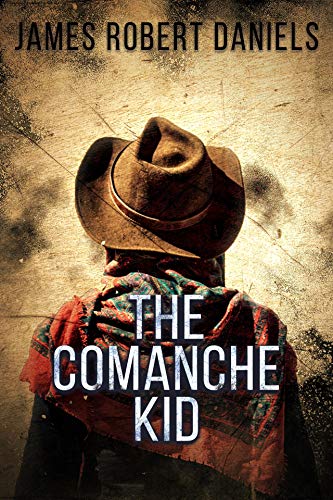
James Robert Daniels is a professional actor and director that performed and wrote for theaters like Shakespeare and Company, Cleveland Play House, Kansas City Repertory, and Asolo. He performed at the Kennedy Center, and contributed to Shakespeare festivals in Illinois, Texas, and Oregon. Daniels served in the infantry in the Vietnam War, and used some of his military experience in his first novel, The Comanche Kid. The western was published in 2021 by Cutting Edge Books

The book begins with one of the more powerful opening paragraphs I've read:

It was early spring when the ocotillo was in bloom that the raiders come down on us and killed everyone but me and Sally. I remember the ocotillo because the tiny red blossoms looked like splattered blood, even though the rains had washed most of the real blood into the earth by then. 

The narrator is Jane Fury, a 16 year-old girl who survives a Comanche attack that savagely kills her parents and brother. In the melee, her sister Sally is taken captive. After burying her family, Jane tracks down some of the murderers, killing four of the raiding party with her father's rifles. Her primary goal is to find and kill her mother's rapist and murderer, a Comanche warrior deemed One-Eye.

After five action-packed chapters, the novel settles into a literary, coming-of-age tale when Jane, disguising herself as a 14 year-old boy (nicknamed The Comanche Kid), herds her family's remaining cattle into a larger and longer cattle drive. The comparisons to Larry McMurtry's Lonesome Dove are probably found here, the inevitable long and winding trail drive that forces the cowboys, and Jane, into battles against nature, each other, and the Comanche tribe. In this regard, I would also compare it to Ralph Compton's successful Trail Drive series.

On the Six-Gun Justice Podcast, Daniels explained to host and author Paul Bishop that he was influenced by Clair Huffaker's The Cowboy and the Cossack. The concept of a long cattle drive developing characters, personalities, and story helped define the style and framework of The Comanche Kid. Additionally, the author explained that the copious amounts of profanity in his book was something he personally experienced during his military career. Cowboys used coarse language, and the book is more realistic because of it. Daniels' love of Shakespeare is a large portion of the book's dialogue, central to a character nicknamed Shakespeare and his romantic chemistry with Jane.

My personal takeaway from The Comanche Kid is twofold. One, the book is certainly a traditional western tale, falling into one of only a handful of possible genre plot devices - the cattle drive. I enjoyed the thirst for revenge and the extraordinary action sequences that brought the revenge to fruition. But, it's a long journey between points A and B, and by page 300 I was simply worn out. I think I needed something a little more to keep me turning the pages. 

Thankfully, the second, and most prevalent aspect, is that The Comanche Kid is a conversation between Jane and God. This was the unique, most compelling portion of the book. Jane was raised as a God-fearing Christian, but struggles with her beliefs and faith after her family's murder. Throughout the book, she questions God, demands that her questions be answered, and walks a balance beam of faith and non-belief. I thought this challenge for forgiveness, retribution, and the struggles of devotion carried the narrative into a thought-provoking realm of enjoyment.  

If you enjoy sweeping, more epic western novels, then The Comanche Kid is your ticket to escapism. Daniels provides a sense of stirring adventure while successfully capturing an authentic, violent portrait of life on the frontier. Recommended. 

Buy a copy of this book HERE.